Bildnachweis: CanChip, Steven Ritzer Photography, Startup Verband.
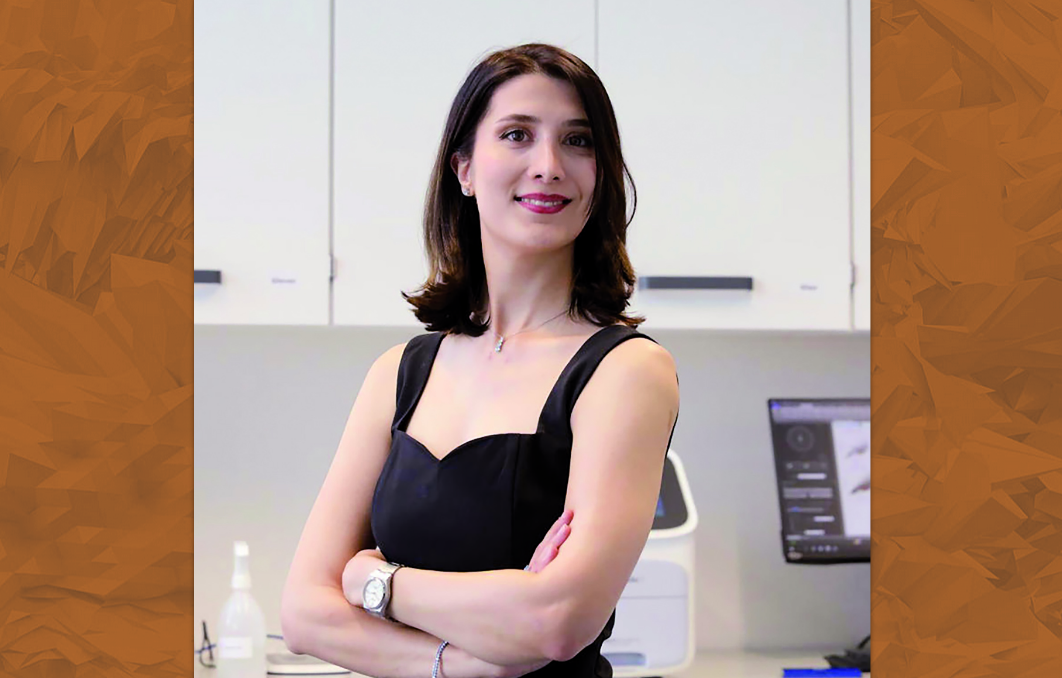
Ghazaleh Madani, CEO of the biotech start-up CanChip, which was founded in 2023, says she is on a mission to revolutionise cancer research with a tumour-on-a-chip she has developed herself. The founder was recently recognised as the Newcomer of the Year 2025 at the ‘German Startup Award’ for her entrepreneurial achievements.
VC Magazin: Ms Madani, you came to Germany from Iran in 2020, successfully completed several courses of study here, and founded your biotech start-up CanChip in 2023. How have you navigated this rapid journey, and what drives you in this endeavour?
Madani: My academic journey began with a degree in biotechnology in Iran, always with the goal of contributing to cancer research – a personal mission shaped by my mother’s battle with cancer. This motivation stayed with me as I moved to Germany and pursued my Master’s in Biochemistry and Molecular Biology. The idea for CanChip was sparked when I met my co-founder, Dr Omid Nejati, and we began discussing the potential of tumour-on-a-chip technologies. That was a turning point: I realised how we could combine engineering and biology to create something truly impactful. What drives me is the possibility of giving patients a faster, more precise path to treatment and ultimately changing the way we fight cancer.
VC Magazin: Your ambition is nothing less than to revolutionise cancer research. What vision do you pursue with CanChip?
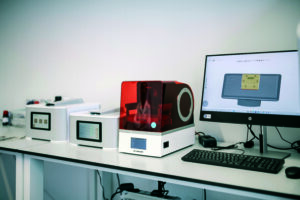
Madani: At CanChip, we aim to make personalised cancer treatment a reality by simulating the tumour microenvironment on a microfluidic chip. Our goal is to shift drug testing away from animals and toward predictive human-based models. We want to become the go-to platform for pharmaceutical companies and research institutions seeking better tools for oncology drug development. Beyond research, our long-term vision is to integrate patient-derived tumours into our chips, enabling clinicians to test therapies in vitro before applying them in vivo. We see a future where ‘trial-and-error’ cancer treatment is replaced by precision and confidence.
VC Magazin: With tumour-on-a-chip technology, cancer therapies are intended to be tailored much more precisely to individual patients. How does your approach differ from existing methods?
Madani: Traditional 2D cell cultures and animal models often fail to replicate the complexity of human tumours. Our tumour-on-a-chip models incorporate multiple human cell types – such as cancer cells, endothelial cells, and immune cells – embedded in a 3D matrix within a dynamic microfluidic system. This setup mimics the human tumour microenvironment more accurately than existing platforms. The advantage? More reliable drug response data, reduced animal testing, and ultimately, faster and safer treatment development. Our model is particularly valuable for rare or treatment-resistant cancers, such as glioblastoma. At the moment, we are finalising our proof-of-concept studies and preparing for collaborations with pharmaceutical partners.
VC Magazin: Artificial intelligence is becoming a game-changer in more and more areas. What role does AI play in your field?
Madani: AI is becoming crucial in personalised cancer research, especially in our organ-on-a-chip models. We currently use AI for automated image analysis to objectively assess cell morphology and drug responses. We’ll expand AI use to analyse complex data such as gene expression and imaging, creating predictive models for patient-specific drug responses. AI will also help optimise experimental design, such as cell combinations and microfluidic settings. Long-term, AI will be essential for preclinical research and personalised medicine by uncovering patterns in complex biology and speeding up drug development through data-driven decisions.
VC Magazin: The tumour-on-a-chip technology is not without controversy, and the path to animal-free drug approvals is not straightforward. What do you say to your critics?
Madani: It’s true that regulatory frameworks still rely heavily on animal testing. But science is evolving. Tumour-on-a-chip technology doesn’t aim to replace all existing methods overnight; it complements and enhances them. Critics often overlook the reproducibility and ethical advantages of in-vitro human models. Moreover, regulators are increasingly open to alternative methods if they show reliable data. Our job is to demonstrate that our chips can deliver consistent, biologically meaningful results. Scepticism is natural with innovation, but we see it as an invitation to improve and prove ourselves.
VC Magazin: You are currently engaged in the validation and certification of your chips. What are the greatest challenges you face in this process?
Madani: The main challenge is the standardisation of a highly complex biological system.
We need to ensure that our chips deliver reproducible results across different batches and cancer types. At the same time, we must develop clear protocols for quality control and documentation that align with regulatory expectations. Another challenge is scalability: transitioning from laboratory prototypes to robust, user-friendly platforms for industry use. This involves materials, automation, and cost optimisation – all while maintaining biological fidelity.
VC Magazin: When do you anticipate approval, and what are the key tasks that need to be accomplished before then?
Madani: Approval is a multi-step journey. While we don’t seek direct medical approval (yet), our chips must gain acceptance as valid preclinical testing tools. In the next twelve to 18 months, our goals include publishing peer-reviewed validation studies, securing key pharmaceutical collaborations, and implementing ISO-aligned quality systems. Regulatory engagement is also key: we are actively participating in networks and consortia to stay aligned with evolving guidelines. We hope to reach an accepted preclinical status within two years and move toward patient-derived applications shortly after.
VC Magazin: In the biotech sector, startups require particularly long-term commitment
and substantial capital. Who are your allies, supporters, and investors?
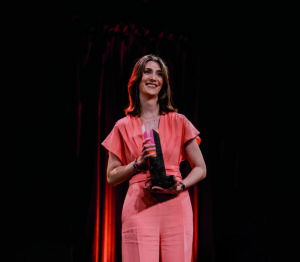
Award
Madani: We are fortunate to have a strong support network. Early on, we received the
Newcomer of the Year 2025 German Startup Award, the special prize of the Brandenburg Innovation Award and won the jury prize at the Female StartAperitivo which helped us gain visibility. The Potsdam Science Park has been instrumental in providing infrastructure, mentoring, and a vibrant start-up ecosystem. We’ve also benefited from networks like HealthCapital Berlin-Brandenburg. While we are currently bootstrapped and supported
by pilot studies and collaborations, we are actively preparing for a seed funding round to expand our team and scale production.
VC Magazin: How close are we to enabling truly personalised cancer therapy for the majority of patients? And what role do biotech start-ups play in this?
Madani: We’re closer than we think. Advances in molecular diagnostics, single-cell analysis, and organ-on-a-chip platforms are converging. What’s missing is integration, and that’s where start-ups excel. We move fast, we take risks, and we fill the innovation gaps left by larger institutions. Personalised cancer therapy will become mainstream when platforms like ours can deliver actionable results within clinical timelines. We believe that within the next five to ten years, tumour-on-a-chip models will be standard tools in oncology pipelines, and start-ups like CanChip will be leading that transformation.
VC Magazin: Last but not least: what would you like to pass on to other (biotech) founders
based on your own experience?
Madani: Coming from a scientific background, founding a start-up was a big step, but also a rewarding one. Talk to potential customers early. These conversations helped shape our product and uncovered real needs. Biotech takes time. Cell culture, quality control, partnerships – everything moves slower than planned. Be patient, but persistent. Soft skills like communication, resilience, and strategic thinking are just as vital as scientific expertise. Avoid the perfection trap: start with what you have and improve iteratively. My advice: build a strong team, stay focused on your mission, and don’t fear mistakes; they’re part of the process. Combine scientific excellence with entrepreneurial courage. That mix can truly move things forward, even in a complex field like biotech.
VC Magazin: Thank you for your insights.
About the interview partner:
Ghazaleh Madani is a biologist, founder of CanChip GmbH, and passionate about innovative solutions in cancer research. With her team, she is developing realistic tumour models on the microchip as an alternative to animal testing and a stepping stone to personalised medicine and faster, more effective therapies.