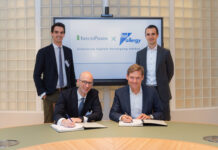
Bildnachweis: ITM.
The radiopharmaceutical industry is entering a new era. Driven by clinical breakthroughs, regulatory momentum, and investor confidence, this once-niche field is now positioned to play a transformative role in precision oncology. Global projections estimate the market could exceed USD 13.7 billion by 2033, and much of this growth will depend not just on scientific innovation, but on strategic execution — an area in which Europe’s radiopharmaceutical ecosystem offers a strong foundation.
Europe is where the development of new radiopharmaceuticals began. It pioneered the concept, drove early innovation, and built the infrastructure that enabled today’s breakthroughs. As the field pushes forward, Europe has a strong shot to cement its global lead – if it acts quickly. With strong academic roots, isotope production, and clinical research, the fundamentals are in place. To stay ahead, Europe must modernise regulations and ensure continued capital investment.
The golden era of radiopharmaceuticals
Radiopharmaceuticals, drugs that use radioactive isotopes to diagnose and treat cancer, are revolutionising nuclear medicine. Recently approved therapies show strong clinical efficacy and commercial success, attracting global pharmaceutical and investor interest. Yet supply chain constraints, production timelines, and isotope half-lives require proximity to manufacturing and agile regulations. As the industry expands, how can Europe lead?
Europe’s role as a pioneer
Europe has long led in nuclear medicine, driving medical isotope production and fostering academic and clinical ecosystems that enabled breakthrough therapies like Novartis’ Lutathera and Pluvicto, with peak revenues expected to exceed USD 2 billion and USD 2.6 billion, respectively. Home to top radiopharmaceutical companies, including 3B Pharmaceuticals, Eckert & Ziegler, ITM, and Novartis, Europe benefits from strong research institutions, biotech clusters, and public-private support. Initiatives like the EU’s Beating Cancer Plan and the OECD’s High-Level Group on Medical Radioisotope Supply (HLG-MR) highlight policy and intergovernmental commitment. Now, to maintain global leadership, Europe must scale this foundation. European companies like ITM are advancing this effort by ensuring broad access to the critical Lutetium-177 (Lu-177), supporting both the wider industry in developing novel therapeutics and their own pipeline.
Innovation is key
The future of radiopharmaceuticals lies in novel isotopes and expanded clinical applications. The shift from Iodine-131 (I-131) to Lu-177 showed the clinical and commercial value of more precise targeting. Beyond Lu-177, which addresses a high unmet need, research is advancing on promising isotopes like Actinium-225 (Ac-225) and Terbium-161 (Tb-161) in radiopharmaceuticals, with favourable physico-chemical properties. Research alone won’t secure Europe’s leadership position, though. Translating academic discovery into viable therapies requires capital, regulatory agility, and robust production infrastructure. Europe holds key assets for innovation, including the world’s largest irradiation capacity through key reactors, including FRM II (Germany), BR2 (Belgium), ILL (France), Petten (Netherlands), Maria (Poland), and Rez (Czech Republic), as well as one of the leading Lu-177 production facilities located at ITM in Germany. Europe is a natural incubator for next-generation radiopharmaceuticals.
Navigating challenges and seizing opportunities
To secure strong leadership, Europe must focus on three key areas:
1. Regulations
Europe’s strong safety standards protect patients, but fragmented and outdated regulations on isotope transport, good manufacturing practice (GMP) production, and marketing authorisation create bottlenecks. For example, each EU country requires separate transport licences despite shared standards. Positive steps are being taken, including a revision of Annex 3 of the EU’s GMP guidelines to produce radiopharmaceuticals. The European Commission is also moving toward regulatory harmonisation, and the implementation of the Clinical Trials Regulation (EU No 536/2014) has introduced a new, unified system across the EU aimed at reducing administrative delays in clinical trials. Meanwhile, the US FDA follows a flexible, science-driven approach: for example, radioisotopes like Lu-177 do not require a full ‘Marketing Authorization Application’, which helps accelerate development timelines. To stay competitive and attract global investors, Europe must continue to modernise and align its regulatory framework.
2. Compassionate use
Europe has long led early clinical access through compassionate use programmes like Germany’s ‘Heilversuch’ and similar frameworks in France and Italy. These programmes allowed patients from around the world to access promising treatments before market approval. They provided patients with life-saving therapies, and created early real-world evidence – accelerating innovation and derisking investment. Maintaining and expanding this flexible framework is vital to preserving Europe’s advantage.
3. Capital flow
Investor interest in radiopharmaceuticals is surging, with billion-dollar deals led by global pharmaceutical companies and driven by the success of blockbuster therapies. With radiopharma proving itself as a scalable business model, venture capital and private equity are now backing the next generation of radiopharmaceutical treatments. But future success will depend on several strategic factors, including new indications, diversified isotope portfolios, and targeting novel tumour pathways. Companies like ITM are building pipelines across isotopes and tumour types, showing how Europe can balance scientific ambition with commercial viability.
Momentum builds in Europe
Europe continues to see key developments in deals and innovation. AstraZeneca acquired Fusion Pharmaceuticals to enter the radiopharmaceutical market. Sanofi and Orano Med partnered to advance a novel radioligand therapy. And, in the past three years, ITM secured record-breaking investments totalling around EUR 700 million to advance its pipeline and radioisotope production. ITM has a set of therapeutic candidates across many tumour types and a unique ‘production-to-patient’ model that integrates isotope manufacturing with drug development. Its lead candidate, ITM-11, recently showed positive Phase III results in GEP-NETs. ITM’s integrated model is just one example underscoring the maturity and potential of Europebased innovation. This approach not only enables scalability and supply security but also strengthens Europe’s capacity to translate
breakthroughs from lab to clinic. As investor engagement deepens, Europe is poised to deliver strong financial returns and meaningful, lasting impact for patients worldwide.
Conclusion
Europe stands on the cusp of the next wave of radiopharmaceuticals. The great minds and companies that built this industry are here. Now, with visionary leadership and targeted investment, Europe can accelerate future breakthroughs. The expertise, infrastructure, and pipeline are all in place. What’s needed is collective action: faster regulation, scaled production, and sustained capital flow. For investors, innovators, and regulators alike, the moment to act is now. By championing this emerging field, Europe can help redefine the standard of care in cancer treatment, ultimately delivering both meaningful returns for today’s investors and life-changing impact for patients tomorrow.
About the authors:
Dr Klaus Maleck has been Chief Financial Officer at ITM since June 2021. He brings over 25 years of experience in the biopharmaceutical industry, having held executive roles at Tetec AG, Evotec AG, and BioGeneriX AG. He holds a PhD in Biochemistry and degrees in Biotechnology and Business Administration.
Dr Mark Harfensteller joined ITM in 2008 and has served as Chief Operating Officer since
2016. In 2024, he was appointed to the Executive Board. He oversees production and infrastructure, including the company’s GMP facilities. He holds a PhD in Mechanical Engineering.