Bildnachweis: Pexels, Brandenburg Kapital, Curie.bio, Carma Fund, HTGF, shiftingbio.
VC Magazin: How do you currently assess the position of the DACH region within the international life sciences ecosystem and where do you see room for improvement or strengths compared with other global markets?
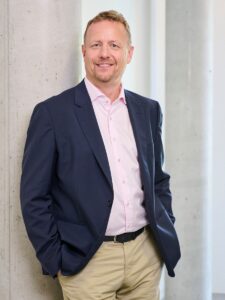
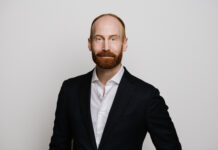
Dr Moritz Beissenhirtz, investment director life sciences, Brandenburg Kapital: The region is characterised by academic excellence and a plethora of young international talent, both at the highest ranking in stitutions and the numerous midtier universities. Unlike other regions, there are several strong hubs competing with and complementing each other. However, there still is insufficient translational activity from academia into start-ups, which has hamstrung economic development in the sector in the past. This topic has been discussed for as long as I have been in the industry. We have seen significant progress and must continue in our efforts to realise the region’s potential.
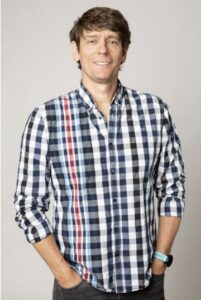
Christoph Lengauer, PhD, MBA, co-founder and CSO, Curie.Bio: The ideas, discoveries, and insights of scientists in the DACH region are extremely valuable and globally competitive. Their translation towards meaningful drug embodiments is inferior to the streamlined processes in North America and China.
Dr Martin Raditsch, general partner and managing director, Carma Fund: The DACH region is a leading ecosystem in the life sciences sector for early-stage R&D and translation. Germany is still a driving engine when
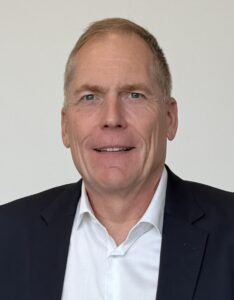
it comes to groundbreaking technologies derived from basic research, while Switzerland contributes its pharmaceutical expertise and capital, and Austria shows significant growth through its start-up networks. The weakness lies not in innovation, but in its implementation. Compared with the United States, the DACH region has less growth capital, on average a slow technology transfer process and fewer serial entre- preneurs. Faster licensing, cross-border studies, and institutional investors could help ensure that more scientific discoveries are transformed into worldclass companies.
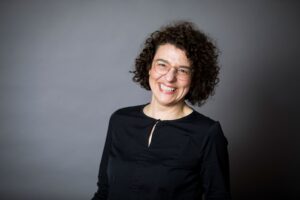
Dr Angelika Vlachou, partner, High-Tech Gründerfonds: DACH is world-class in science and industry but has yet to realise its full potential as an integrated ecosystem. The biggest gap is faster and more efficient translation from research to scalable companies. This requires more growth capital, faster regulation, and greater data access.
Niels Sharman, Founder and Director, shiftingbio:
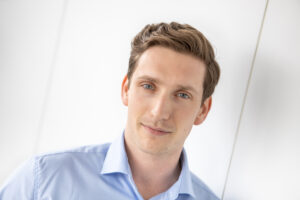
DACH has an excellent scientific base, strong universities, and an established pharma and biotech industry. Where we still fall behind the US, and increasingly China, is in turning this science into large, globally successful companies. The problem is less a lack of innovation than access to capital, speed, and the willingness to think globally from an early stage.
VC Magazin: In which areas of the life sciences do you expect AI to have the greatest impact, and where do you see AI as a game changer?
Beissenhirtz: AI has a great impact on improving reliability and lessening workforce limitations in diagnostics, especially in complex imaging analysis. Looking ahead, it has the potential to fundamentally improve our understanding of biological processes and molecular interactions, particularly analysing large, fluctuating data sets from proteomics and beyond.
Lengauer: Within the next five years, the greatest impact of AI will be in the generation of enabling tools and an acceleration of processes. In life sciences, this is best done with a human in the loop. Human scientists will continue to intentionally intercept, evaluate, and guide AI at critical decision points. AI will be a game changer in clinical trial design and conduct. Generative drug design will receive enormous amounts of funding but cannot match expectations for the next few years because it lacks the foundation of underlying experi- mental data.
Raditsch: It is where complex data meets costly decisions that AI will have the greatest impact on development speed and precision of target validation, molecule design, clinical trials, and diagnostics. Its revolutionary potential lies in the speedy learning process: models propose experiments, laboratories test them, and the data improves the next prediction. But the ownership of proprietary data will make the difference not just the algorithms.
Vlachou: AI’s greatest impact emerges where large datasets, repeatable decision or experiment cycles, and measurable value like higher hit rates or shorter development come together. The key shift will occur when AI generates hypotheses, designs molecules or biological systems, and prioritises experiments. Short-term impact is in drug discovery, clinical trials, and diagnostics; medium-term impact in multimodal precision medicine and AI-enabled bioprocessing; and long-term impact in autonomous labs and closed-loop design-build-test-learn systems.
Sharman: I see the larger opportunity for AI in reducing biological and clinical uncertain- ty rather than in simply designing better molecules. Large, multimodal patient datasets could help us better predict treatment response, patient stratification, and immunogenicity. The real breakthrough would occur if AI could materially increase clinical success rates. Whether this is possible at scale still needs to be proven
VC Magazin: Beyond AI: which current technology trends in the life sciences do you consider to be particularly attractive investment opportunities?
Beissenhirtz: Drug development still rules the investment landscape in the sector. Beyond cancer, we see increased attention towards neurology and autoimmune diseases. Both fields are ripe for a breakthrough. Medtech sentiment appears to be improving after some tough years.
Lengauer: Any that lead to a robust drug embodiment for targets or target product profiles that we could not drug before.
Raditsch: In addition to AI, areas of re- search include RNA-based therapeutics, gene editing and transfer, protein degradation, radiopharmaceuticals, antibody-drug conjugates, multispecific antibodies, cell therapy, precision diagnostics, and biomanufacturing. Success, however, depends on in-depth biological knowledge, manufactuing feasibility, reimbursement prospects, and an effective capital strategy to achieve clinical proof of concept.
Vlachou: The most attractive investments are technologies that make entire fields practical, scalable, and affordable. Next-generation solutions will address critical bottlenecks and offer strong technology with multiple applications. For DACH, combining its strengths in research, pharma, chemicals, medtech, industrial bi- otech, and manufacturing with new plat- form technologies offers a highly attractive opportunity.
Sharman: I am particularly interested in areas in which DACH still has real scientific and technological strengths, such as radiopharmaceuticals, as well as emerging fields like targeted protein degradation. I think we also need to take more technology risk and think more globally. China, for example, has become very good at developing drugs quickly and capital-efficiently. Combining the strengths of different eco- systems could make European biotech much more competitive.
VC Magazin: Thank you very much!