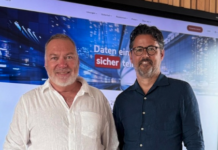
Bildnachweis: Dr. Holger Bengs, BCNP Consultants.
Public funding mitigates risks, but it cannot replace equity. Life sciences founders who merely jump from one funding deadline to the next, or who masquerade as tech companies for investors, lose sight of what matters most: the market. In our interview, Dr Holger Bengs reveals why true traction and genuine partnerships beat any funding trick.
VC Magazin: Dr Bengs, you have been supporting biotech start-ups for over 20 years. Do you share the drastic assessment that we are entering a phase where public funding must effectively be the ‘new Series A’ for founders – or is that view too pessimistic?
Bengs: Public funding can de-risk technology, but it cannot replace equity. Series A is about scaling, and scaling requires private capital and visible industrial traction. What has changed is the threshold: investors expect stronger proof of market access and strategic partnerships before committing. Capital follows validation – and validation today is increasingly ecosystem-driven.
VC Magazin: A common recommendation for founders developing drug candidates is to avoid the ZIM programme, as biological risks are often not recognised as technical risks there. Instead, ‘KMU-innovativ Biomedizin’ is said to be the safer haven. Does this tally with your experience at BCNP?
Bengs: I would avoid blanket recommendations. Funding instruments are tools, and tools must fit the innovation logic. Biological uncertainty and technical engineering risks are assessed differently, so positioning is key. In practice, applications become far stronger when companies demonstrate industrial collaboration and market relevance. Success depends less on the label of the programme and more on credible integration into a value chain.
VC Magazin: With the AI boom, many health start-ups are facing an identity problem. Do life sciences founders with a strong software focus effectively need to ‘masquerade’ as tech companies today in order to survive the competition for funding against traditional drug discovery?
Bengs: Masquerading is rarely sustainable. Investors and industrial partners look for clarity, not camouflage. The challenge is to articulate your real value proposition and connect with the right stakeholders. Companies that position themselves authentically – and build the right partnerships – create more stable and long-term financing options than those chasing trends.
VC Magazin: What forms of bridging finance do you currently consider realistic to span the waiting times caused by rigid cut-off dates, without the company formally falling into financial difficulty – and thus becoming ineligible for funding again?
Bengs: Bridging requires a smart capital mix: angels, convertibles, strategic co-development agreements and, in selected cases, crowd financing. But the most robust bridge remains early industrial engagement. Companies embedded in active partnerships are structurally more resilient to timing gaps because cooperation enhances credibility, optionality, and access to capital.
VC Magazin: Finally: In your view, is SPRIND truly the long-awaited, flexible answer to rigid German funding bureaucracy – or does it remain a niche programme for a few ‘radical’ outliers for the time being?
Bengs: SPRIND sends an important signal that radical innovation deserves flexible approaches. At the same time, it is intentionally selective and addresses specific high-risk profiles. It complements the funding landscape rather than replacing it. Ultimately, success depends less on a single instrument and more on how well founders position themselves within networks of capital, industry, and expertise.
VC Magazin: Thank you for your insights.
About the interviewee:
Dr Holger Bengs is the founder and CEO of BCNP Consultants GmbH. He supports start-ups and SMEs in identifying and successfully applying for government funding programmes. As a key bridge-builder between start-ups, medium-sized enterprises and large corporations, he initiated the speed-dating event European Chemistry Partnering (ECP) in 2017 to bring together start-ups and chemical corporations across sector boundaries.