Bildnachweis: ICPO, VC Magazin, Pixabay.
Theranostics, with its special subfield called radiotheranostics, is an innovative
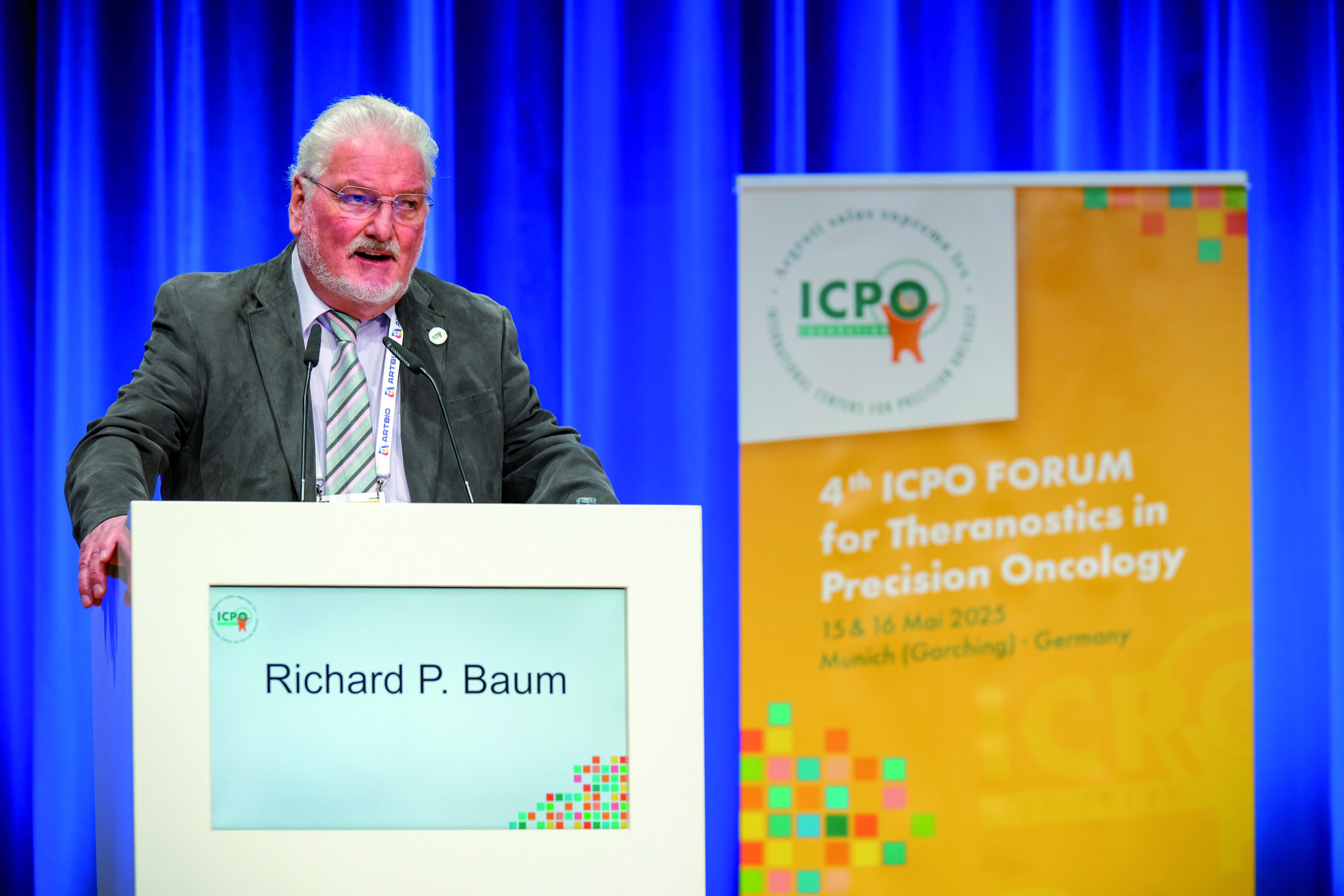
approach that combines diagnostic imaging and targeted therapy using radionuclides to detect and treat cancer, enabling a precise, patient-specific treatment. As a pioneer in this field, Prof. Dr Richard P. Baum tirelessly works to further improve this groundbreaking therapy form to make it available worldwide for cancer patients. Learn more about this in the interview with Prof. Dr Baum.
VC Magazin: Prof. Dr Baum, what motivates you to take such a leading role in precision oncology?
Baum: What drives me is the vision to transform cancer care worldwide: moving from late to early diagnosis, actively participating in comprehensive patient care, extending survival from months to years, and, most importantly, preserving and enhancing the quality of life by avoiding ineffective treatments. As co-founder and trustee of the ICPO Foundation and President of the online education platform ICPO Academy for Theranostics, I support the mission of the international foundation to scale patient access for radiotheranostics worldwide. I see a profound opportunity and responsibility for the theranostics community to contribute to this paradigm shift towards precision oncology and in June 2025 joined the board of the new initiative of the RLT Angels Association with the funding members of the ICPO Foundation, European Association of Nuclear Medicine (EANM), GE HealthCare, Novartis, and RayzeBio, a Bristol Myers Squibb company. My goal is to ensure that every patient, no matter where they live, can benefit from the full potential of radiotheranostics.
VC Magazin: How does Germany’s position in theranostics compare on a global scale?
Baum: Germany remains a leader thanks to strong academic centres, established radiopharmaceutical production, and pioneering trials with new radiopharmaceutical
game changers. The ICPO Forum, held in May 2025 in Munich at the TUM Campus,
highlights disparities: Germany is reflecting on adapting its regulations to offer outpatient
care, while France faces heterogeneity in the adoption of outpatient therapy practices.
India experiences high patient loads addressed by a growing number of private centres. Africa has a very limited nuclear medicine infrastructure – a single training hub could catalyse growth, while South America struggles with unclear guidelines. Recognising these differences is vital to designing effective, localised solutions.
VC Magazin: What are the latest developments in theranostics that you find particularly promising?
Baum: Building on Lutetium-177 therapies, novel targets (FAP, CAIX, GPC3, Trop2, DLL3) and alpha-emitters (Actinium-225, Astatine-211, Lead-212, Terbium-161) expand options for previously untreatable tumours. The combination of regimens and multi-tracer PET refines patient stratification. Innovative production approaches (regional cyclotron networks, generator systems) address supply challenges. Furthermore, AI is seen as a key enabler in this field. Prioritising structured AI adoption, supported by cross-stakeholder collaboration, is essential. In this context, the ICPO Foundation launched an AI research call with the topic ‘Curation & Standardization of Theranostics Datasets’ with a funding of EUR 100,000.
VC Magazin: What changes do you think are necessary to further advance theranostics in clinical practice?
Baum: Systemic barriers must be addressed holistically. Regulatory agencies should adopt
harmonised, adaptive approval pathways and outpatient administration. Traditional clinical
trial designs often misfit radiotheranostics. Adaptive study frameworks can evaluate novel agents and combinations more efficiently. Financial models must reflect longterm value, including extended survival, improved quality of life, and cost savings from avoiding futile therapies, to justify investments in infrastructure and trained personnel. Regional theranostics centres can concentrate expertise, standardise workflows, and serve as hubs for research and education. Lifelong training via online platforms, e.g., the ICPO Academy for Theranostics with certified education or IAEA remote courses, builds global capacity. Engaging patient representatives early ensures frameworks remain patient-centered and equitable.
VC Magazin: Who can currently benefit from theranostics and what needs to be done to democratise access to this very exclusive and expensive form of therapy?
Baum: Currently, patients with neuroendocrine tumours, advanced prostate cancer, or certain thyroid cancers are the primary beneficiaries of radiotheranostics. With approximately 225 ongoing trials, this field could expand to encompass over 15 cancer indications, thereby increasing patient benefit. Theranostic procedures such as Lutetium-177-PSMA and Lutetium-177-DOTATATE are currently available only at specialised centres, typically university hospitals or major nuclear medicine facilities. Patients become eligible when a clear medical indication exists, which has been confirmed by a multidisciplinary tumour board (MDTB), and the relevant target has been verified through molecular imaging (PET/CT). Cost coverage depends on the therapy’s approval status. For approved treatments such as Lutetium-177-DOTATATE, statutory health insurance generally covers the expenses. For non-approved options, reimbursement is often granted only on a case-by-case basis, leading to uncertainty and potential delays. In some instances, patients
may need to pay out of pocket. To improve access, it is essential to establish faster approval processes, expand treatment capacity, and implement a standardised national reimbursement policy, ensuring that access is not determined by geography or socioeconomic status. Democratising theranostics also requires the establishment of more centres, qualified personnel, consistent regulatory pathways, and sustainable funding. We are working diligently to ensure that theranostics develops from a niche treatment into an integral part of individualised cancer therapy in the coming years.
VC Magazin: Prof. Dr Baum, thank you for your insights!
About the interview partner:
Prof. Dr Richard P. Baum, MD, PhD, is Trustee of the ICPO Foundation, President of the ICPO Academy for Theranostics, Consultant of the Advanced Center for Radiomolecular Precision Oncology (RPO) at Curanosticum Wiesbaden-Frankfurt, Germany, and Board Member of the RTL Angels Association.