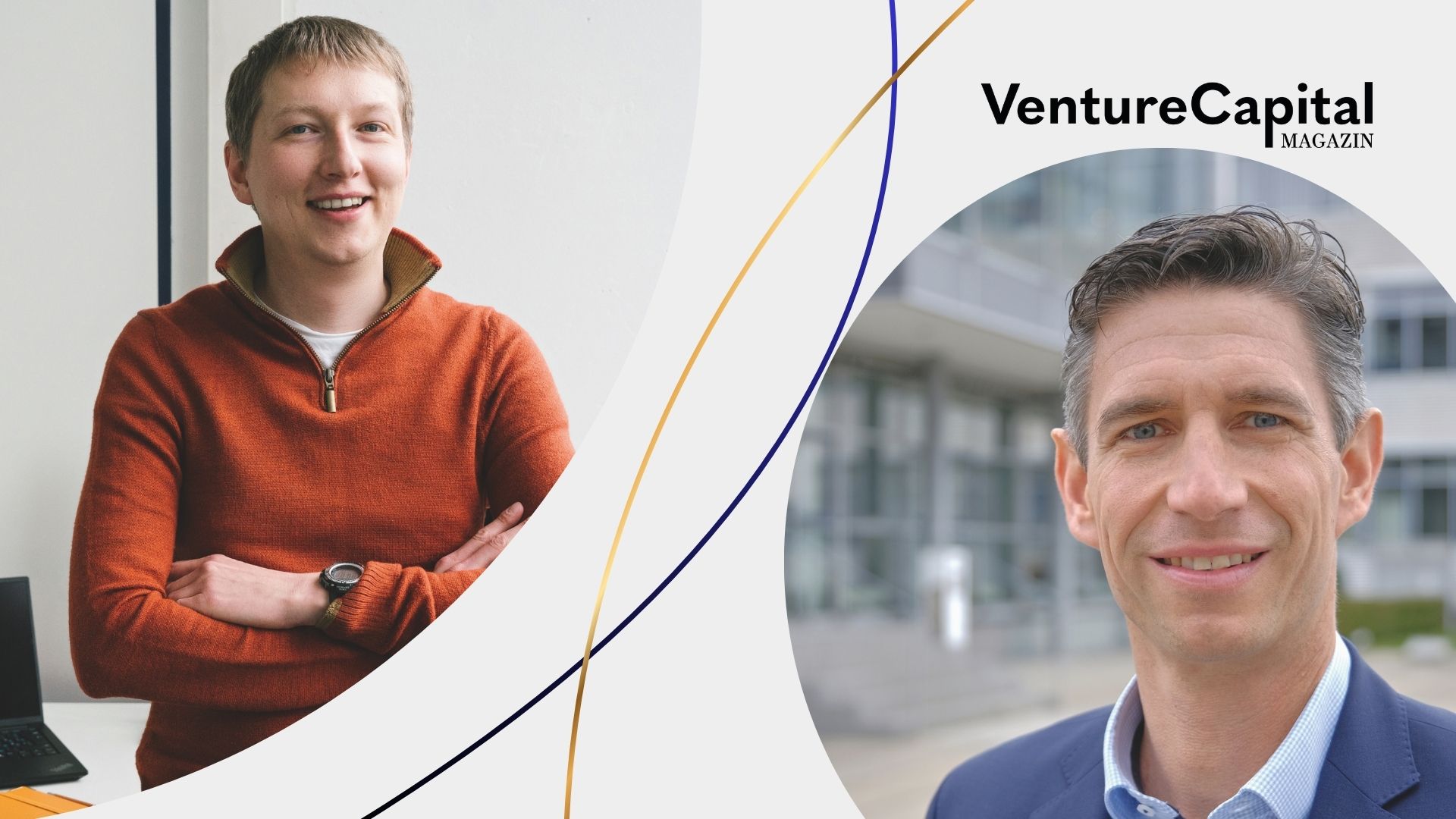
Bildnachweis: Pavel Elizarev (Smey) & Christian Gnam (IZB).
In the biotech world, yeast is often hailed as the ‘factory of the future’. Martinsried-based start-up Smey is turning that vision into an industrial reality. By developing sustainable alternatives to traditional fats and oils, Smey is tackling one of the greatest challenges in modern production.
At the heart of this innovation is the Neobank of Yeasts (NOY). Pavel Elizarev, PhD, Chief Scientific Officer (CSO) at Smey, describes the platform as a technological powerhouse: ‘Our NOY platform is a discovery engine – a living library of yeast strains, biological data, and AI-driven insights that allow us to design and develop next-generation lipids, enzymes, and functional compounds.’
The strategic roadmap to scale-up
For biotech start-ups, the ‘Valley of Death’ usually lies between laboratory success and mass production. Smey has a clear roadmap to bridge this gap. Following pilot-scale validation, the start-up is leveraging European contract manufacturing partners. However, the long-term goal is total independence. ‘Smey plans to develop its own modular fermentation capacity of approximately 1,000 tons per year by 2028, scaling to between 3,000 and 10,000 tons by 2030,’ says Elizarev. This industrial focus was recently recognized in Paris with the prestigious Manufacturing Process Award.
Sustainability as a quantifiable business case
In the ‘Impact Life Science’ movement, sustainability is no longer a buzzword – it’s a metric. Smey utilises ISO-standard Life Cycle Assessments (LCA) to ensure total transparency regarding its environmental footprint. Because fermentation tanks require drastically less land than traditional oil crops like palm oil, the carbon footprint is often an order of magnitude lower. ‘Our mission is to produce oils that are ethical and local by design,’ the CSO emphasises.
IZB: evolving the biotech DNA
The Innovation and Start-up Center for Biotechnology (IZB) in Martinsried provides the ideal fertile ground for this ambitious scaling. While the centre has historically been a biopharma stronghold, Christian Gnam, Managing Director of IZB, sees companies like Smey as a vital evolution of the campus. ‘Smey isn’t changing the DNA of the IZB – it’s expanding it. They are helping transform Martinsried into an integrated life-sciences ecosystem that bridges the gap between medical innovation and sustainability-driven solutions.’ The physical proximity on campus fosters a unique synergy between ‘classic’ biotechnology and new-age, impact-oriented approaches.
Supporting sustainable biotech solutions
‘We see ourselves as bridge builders between start-ups and investors who have a strategic understanding of the biotech scale-up phase,’ says Gnam. While the IZB cannot take the operational burden off the founders’ shoulders, it supports them through an elite network of investors and flexible infrastructure. The goal for the coming years is clear: turning world-class research into internationally competitive companies that bring sustainable
biotech solutions to global markets.