Bildnachweis: Nuclidium.
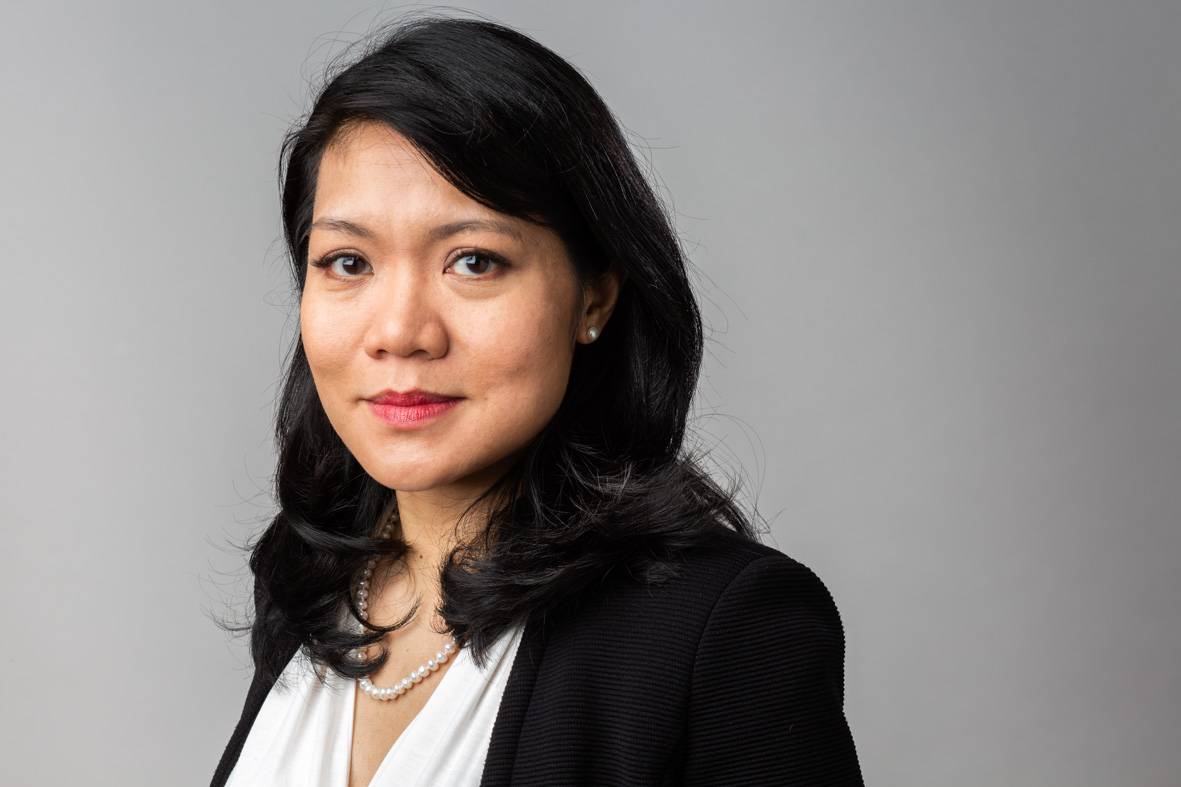
Dr Leila Jaafar-Thiel, CEO of Nuclidium, explains how the company’s copper-based radiotheranostic approach will become a milestone in precision oncology for an improved individual treatment of patients.
VC Magazin: In less than twelve months, Nuclidium has raised approximately EUR 115 million. Has the first part of this series B financing round been a catalyst for Nuclidium for amassing more awareness in the biopharmaceutical industry?
Jaafar-Thiel: Absolutely. It has provided strong momentum for us. We now have the funding, the support, and the trust from our existing investors that allow us to rapidly advance our clinical pipeline and position our copper-based programmes for success. Our goal is to develop our two lead therapeutic candidates through phase IIa and to bring at least one of our undisclosed preclinical candidates into the clinic.
VC Magazin: What’s the idea behind the use of copper diagnostics in precision oncology?
Jaafar-Thiel: We believe that our copper-based radiotheranostic approach offers many advantages not only for patients, in terms of safety and efficacy of diagnosis and treatment. It also allows for a simpler hospital workflow and scalable production, making this drug class more accessible worldwide. More specifically, the advantage of copper theranostics in precision oncology is that they bring together diagnosis and treatment in a highly specific and potentially effective way. The use of copper isotopes enables a shift from a qualitative to a quantitative diagnostic setting. Clinically, that shifts theranostics from a binary ‘target present/target absent’ model toward a more quantitative one: who should be treated, how strongly is the target expressed, what is the likely tumour-to-normal-tissue balance, and how we can eventually adapt therapy more intelligently.
VC Magazin: What does that mean in the grand scheme of things?
Jaafar-Thiel: With this direct conversion from cancer diagnosis to treatment, we can treat cancer patients much more precisely, allowing for dosing flexibility to address the specific needs of the individual patient. This wide therapeutic window creates the potential to move radiotheranostics into earlier lines of treatment.
VC Magazin: Why did Nuclidium choose metastatic prostate cancer for one diagnostic and therapeutic pair?
Jaafar-Thiel: We have seen some good successes with Pluvicto from Novartis in this indication and its progression into earlier lines of therapy. However, currently available radioligand theranostics only reach a fraction of eligible patients due to constraints in raw material availability, manufacturing, efficacy, and safety. The properties of Cu67, including its shorter half-life and higher decay rate, as well as its higher energy transfer, should allow us to use higher dosing for patients than what is currently used in the clinic. This could achieve a wider therapeutic window and more flexibility in the treatment regimen. Compared with NU101, Pluvicto is a lutetium therapeutic with a gallium diagnostic. The ligand in this part of the molecule is not identical, which means that you can only make qualitative assessments of whether the tumour is there or not.
VC Magazin: NU201 and NU101, the two clinical candidates of Nuclidium, have entered phase I/IIa studies for the treatment of prostate cancer and metastatic breast cancer. What is your future clinical and commercial strategy?
Jaafar-Thiel: We’re aiming to position our two drug candidates as second- or first-line therapies in these indications in the early, pre-chemotherapy setting. The advantages compared with chemotherapy are improved patient quality of life and a differentiated safety profile. Antibody therapies have demonstrated promising antitumour activity, but patients require constant care and administration of the drug over two years; a burdensome process that impacts the patient experience. What we intend to do with our CuTrace platform is to be able to treat the patient for a short or limited amount of time, between 16 and 32 weeks, and then have dosing stop. This could have a profound effect on the quality of life for the patients, in particular for metastatic breast cancer patients.
VC Magazin: What are the next value inflection points of the clinical pipeline?
Jaafar-Thiel: The diagnostic component of NU101 will be evaluated in a phase II clinical trial, while the therapeutic/diagnostic combination (theranostic) will be evaluated in a phase I/II clinical trial for metastatic prostate cancer. NU201, an SSTR antagonist, completed the phase I/II diagnostic trial and is now going into a theranostic clinical trial for HR+/HER2- metastatic breast cancer. Both therapeutic trials will start in 2026, but we’re also recruiting patients to complete the phase II purely diagnostic trial for metastatic prostate cancer. Our strategy is to run three clinical trials as separate studies for future development.
VC Magazin: Could you explain the key rationale behind this?
Jaafar-Thiel: The diagnostic component of NU101 for prostate cancer can already be a standalone product. This product can not only be used for primary imaging and biochemical recurrence of patients, but also to stratify patient groups. This diagnostic can not only be used for our programmes but also for the primary staging of metastatic prostate cancer for other prostate cancer therapies, which makes it very versatile.
VC Magazin: Does this make the product an attractive out-licensing candidate?
Jaafar-Thiel: As we advance our pipeline, we are always evaluating all strategic options to support our goal of bringing our next-generation radiotheranostic approach to novel indications and more patients faster.
VC Magazin: What are the medical and commercial goals for NU201?
Jaafar-Thiel: We intend to develop NU201 as a potential second-line therapy. Our strategy is to evaluate the big pharma landscape and their portfolios and identify where our development would fit into their R&D programmes for metastatic breast cancer. Our learnings from discussions with big pharma representatives are that data is key, they want to invest in a product, not in a technology, and they want to understand how our drug candidate could fit into and complement their existing portfolio.
VC Magazin: Do you expect a general medical breakthrough of radiotherapies within the next three to five years?
Jaafar-Thiel: I expect significant progress on three medical fronts. First, radiotherapies are moving into earlier lines of treatment. In metastatic prostate cancer, for example, huge patient populations are lacking new therapies, especially in earlier lines of therapy. Moreover, radiotherapies are being investigated in new indications that have been difficult to address due to a lack of targets. Breast cancer is a good example here. Third, with the next generation of targeted radiotherapies, we can move beyond targets that are uniformly expressed across all lesions and address more heterogeneous disease settings. This is the approach we are applying in our metastatic breast cancer programme. Breast cancer often shows heterogeneous target expression, both between patients and across lesions within the same patient, which makes treatment selection more challenging. In this context, high-quality diagnostic imaging is critical for identifying the right patients, understanding target distribution, and enabling more effective, individualised treatment.
VC Magazin: Which are the biggest hurdles for a broader adaption of theranostics in cancer therapies?
Jaafar-Thiel: There are three challenges theranostics must overcome to enable broader adoption. The first one is manufacturing and supply. Securing a resilient supply of radioisotopes and building a global production network is critical to ensure patients have access to targeted radiotheranostics. The second challenge is integration into hospital workflows. Clinics need special treatment rooms with radiation protection and the appropriate equipment infrastructure, which is another major issue, as medical centres must provide radionuclide production facilities to enable broader use of radioligand therapies for a large number of patients. Waste management is the third big challenge. As radionuclides can have a high waste potential, waste management is crucial for hospitals and a big cost factor for them, as, depending on the isotope, it requires significant storage capabilities.
VC Magazin: How has Nuclidium resolved these problems?
Jaafar-Thiel: To reduce its footprint, Nuclidium has developed its own technology to produce Cu61 and the respective tracers. It must go seamlessly to the CDMO, and it needs to be done in ten to eleven weeks. On the therapeutic side, we’re working with our partners to produce over 80,000 patient doses at these facilities. Our therapy can be seamlessly administered in any medical centre that has been using Pluvicto from Novartis. No new equipment needs to be installed, and there is no radioactive waste because Cu61 decays into a stable isotope. The interdisciplinary aspect of theranostics is another important point we must be aware of.
VC Magazin: What does that mean for research and development?
Jaafar-Thiel: We have to involve not only experts in the biology and chemistry fields for the manufacturing part, but also physicians and engineers to produce our radiodiagnostics. These experts can understand how a particle accelerator, used to produce our therapeutics, works. We must attract physicians and engineers to bring them into the biotech space. Nuclidium is working with students to provide training with the goal of recruiting them later.
VC Magazin: Which role does a proprietary revenue base play in the future business strategy?
Jaafar-Thiel: We need to develop IP to produce radionuclides and radiopharmaceuticals alongside our proprietary pipeline programmes. Licence fees from every company using this technology are a smart way to monetise the global development of theranostics.
VC Magazin: Does Nuclidium consider an IPO as a viable option to enlarge its investor base?
Jaafar-Thiel: We will continue to evaluate all strategic opportunities to advance our radiotheranostics pipeline. For a biotech at our stage, flexibility is important. Our focus right now is on delivering the next value inflection points with our R&D pipeline, i.e., positive data in our two clinical trials in the US.
VC Magazin: Thank you very much.
About the interviewee:
After completing her PhD in biophysics, Dr Leila Jaafar-Thiel worked in nuclear engineering for 20 years, including in the production of radionuclides. In 2020, she founded Nuclidium and is now leading the company’s international strategy to bring targeted radiopharmaceuticals to patients worldwide.