Bildnachweis: HMNC Holding GmbH.
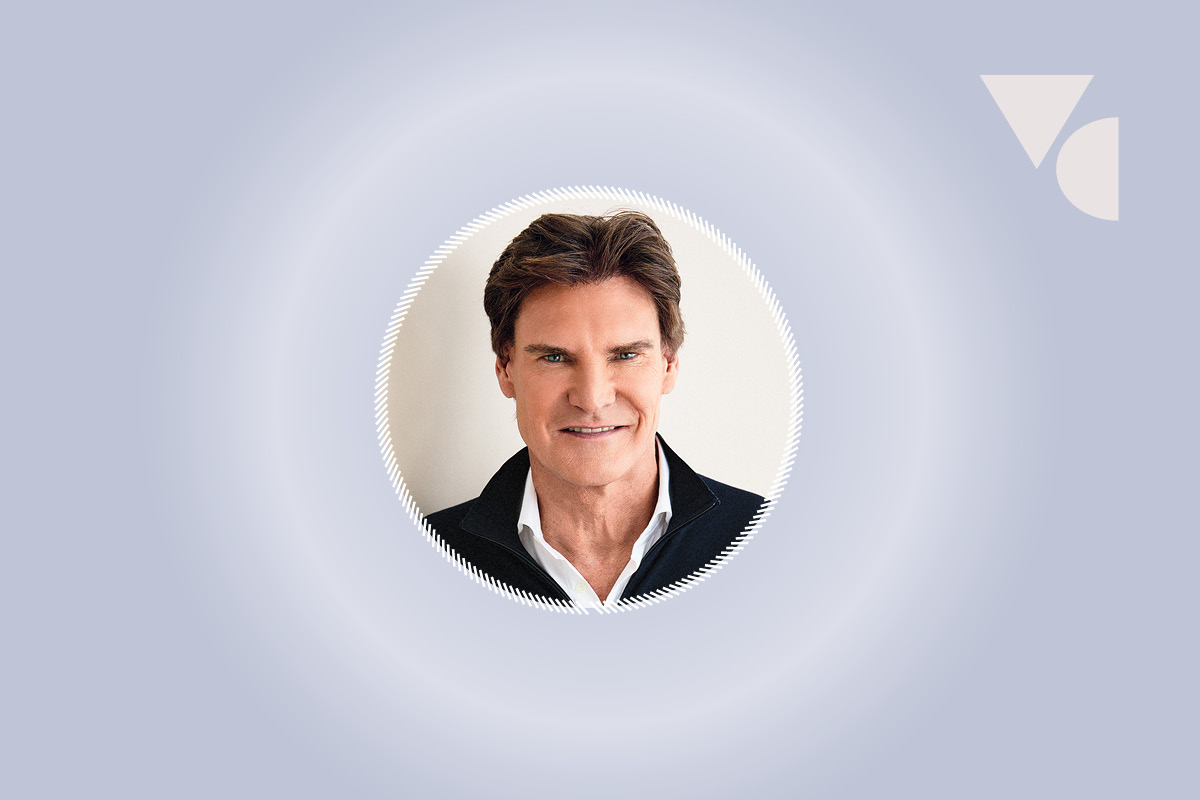
With HMNC, Carsten Maschmeyer aims to make the treatment of depression more precise. In this interview, the founder discusses the EUR 50 million series B financing round, new clinical data, and what Europe needs to turn scientific excellence into global biotech champions.
VC Magazin: You founded HMNC following your experience of excessive performance pressure, which ultimately led to burn-out, prescription drug dependency, and depression. How has this experience shaped your entrepreneurial vision, and what convinced you that it could form the basis of a scalable biotech company?
Maschmeyer: What struck me most was how imprecise psychiatric treatment still is. Patients often go through several therapies before finding one that works – if they find one at all. In almost every other area of medicine, we would consider that unacceptable. That experience became the starting point for a much bigger question: what if we could understand depression not only through symptoms, but through its underlying biology? Together with Prof. Florian Holsboer, I developed the vision of bringing precision medicine to psychiatry. The scalable opportunity lies in using biological information to make treatment decisions more targeted, more predictable and ultimately more effective. This is not a niche problem. It affects millions of people worldwide.
VC Magazin: HMNC recently closed a EUR 50 million series B financing round while also reaching a major scientific milestone with the results of the ‘Olive’ study. To what extent did these latest clinical data influence investor interest?
Maschmeyer: The Olive data were clearly an important proof point. Nelivabon showed a statistically significant antidepressant effect in a large clinical trial, which is a major achievement in an area where many programmes fail. Even more important is the prospect of identifying, through biological markers, which patients are most likely to respond. That is precisely the kind of differentiation precision psychiatry needs. But experienced investors never invest based on one result alone. They look at the entire company: the quality of the science, the strength of the pipeline, regulatory progress, the team, and the ability to execute. HMNC now has two advanced clinical programmes with different mechanisms of action and a much stronger management structure. In addition to Nelivabon, this also includes a ketamine-based development programme, which is to be prioritised and accelerated through the strategic partnership with Medice. The financing therefore reflects confidence in both the data and the company behind them.
VC Magazin: Your investor base includes not only specialised life sciences investors but also high-profile individuals such as Toni Kroos and Matthias Schweighöfer. What were the key arguments that persuaded these investors to back HMNC?
Maschmeyer: Depression is a disease that almost everyone encounters in some form. Personally, within their family, or among friends. The human impact is enormous, and so is the economic burden. Yet the way we treat it has not advanced nearly enough. That creates a rare combination: the opportunity to solve a major societal problem and build a highly relevant company at the same time. HMNC is not trying to launch the next conventional antidepressant. The ambition is to change the logic of treatment by matching the right therapy to the right patient. For prominent investors, there is also another dimension. Their involvement creates attention, reduces stigma, and helps make mental health a topic that can be discussed openly. Capital can drive scientific progress, but visibility can drive social progress as well.
VC Magazin: Germany is home to worldclass scientific research, yet many global biotech champions are built elsewhere. Where do you see the greatest strengths of the German and European biotech ecosystem, and in which areas are we still behind in international competition?
Maschmeyer: Europe has no shortage of scientific excellence. Our universities, research institutions, and university hospitals are among the best in the world, and Germany has a long pharmaceutical tradition. The problem begins when you want to turn science into a company. The United States are much better at combining research, capital, experienced management, and the willingness to take entrepreneurial risks. In Europe, financing rounds are often smaller, decision-making takes longer, and regulation remains more fragmented and complex. We are very good at producing knowledge, but not always good enough at turning that knowledge into global market leaders. What Europe needs is more speed, far less bureaucracy, more ambition, and the willingness to scale. HMNC shows that a global biotech company can be built from Germany. But it only works when world-class science is combined with long-term capital, strong leadership, and disciplined execution.
VC Magazin: In the life sciences sector, there is frequent discussion about the funding gap between early-stage research and later-stage growth financing. How do you assess the current funding landscape in Germany and across Europe?
Maschmeyer: Europe supports academic research and early-stage companies well. The real problem begins as companies move from the laboratory into clinical development. Capital requirements then rise dramatically. A clinical programme can require tens of millions of euros as scientific and regulatory risks remain high. Europe has too few investors with the capital and expertise to support companies through several clinical phases. Biotech does not fit a short-term investment model. It requires patience, scientific understanding, and the willingness to finance development periods of ten years or more. Because this capital is often missing, strong European companies are sold too early, pushed into premature licensing agreements or towards the US capital market. Europe invests in science but too often allows others to capture the long-term value.
VC Magazin: From the perspective of both a founder and an investor, what needs to change to ensure that more biotech companies can be supported all the way through to commercialisation?
Maschmeyer: Europe needs larger, more specialised life sciences funds to finance companies across several stages of clinical development. Institutional capital must also play a much greater role. Pension funds, insurers, and other large investors need the regulatory freedom and economic incentives to invest more in European venture and growth capital. Clinical trials and regulatory processes must become faster, more predictable, and more consistent across Europe. A fragmented system costs time, capital, and competitiveness. Finally, we need a more realistic attitude towards failure. In biotechnology, setbacks are not proof that the system is broken. They are part of this process. There will be no medical breakthroughs without the courage to take calculated risks.
VC Magazin: With HMNC, you are pioneering a precision psychiatry approach by developing biomarker- based therapies for depression. Looking five to ten years ahead, what role do you expect precision medicine to play in mental healthcare, and what entrepreneurial opportunities will this create for European biotech companies?
Maschmeyer: Psychiatry will move away from treating patients solely based on symptoms. Two people may receive the same diagnosis even though the biological causes differ, making it unlikely that the same treatment will work equally well for both. Precision medicine can help identify these differences. Biomarkers may help us understand disease mechanisms, select patients more accurately, and design clinical trials more efficiently. No single test will provide every answer. Progress will come from combining genetic, molecular, clinical, and digital data. For patients, that could mean fewer failed treatment attempts, faster access to effective therapy, and better outcomes. For European biotech companies, this creates opportunities to build new diagnostic and therapeutic platforms. Europe has the science to lead this development. The question is whether we also have the capital, speed, and ambition to turn that advantage into global companies.
VC Magazin: Thank you very much.
About the interview partner:
Carsten Maschmeyer is an entrepreneur, international start-up investor, including through the television programme ‘Die Höhle der Löwen’, keynote speaker and bestselling author. Through his venture capital funds seed+ speed (Berlin), ALSTIN Capital (Munich) and MGV (San Francisco), he holds stakes in more than 150 technology start-ups across Europe and North America.