Bildnachweis: stock.adobe.com, adisonpk, nukliD®, WFS, Medical Valley, Siemens Healthineers, LinaThera.
Radiopharmacy is on the path to becoming a huge market for treatment opportunities. For start-ups, regional clusters and networks are the key for attracting investors and reaching the scalability of products. In Germany, two regional clusters take different approaches to promote theranostics.
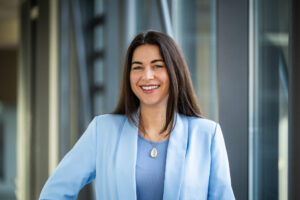
The Dresden-based radiopharmacy cluster is a rather new one that has built up a regional ecosystem in a rather short period of time. The cluster includes clinical and scientific stakeholders as well as collabora- tions with the Theranosticum Lausitz in Cottbus as a Brandenburg-based partner. Equally important are associations such as vfa and BPI, who act as multipliers. The idea for a radiopharmaceutical cluster in Saxony emerged from a dialogue among the scientific community, the business sector, and Saxony Trade & Invest Corp. (WFS). In early 2025, nukliD® was established as a joint network through a memorandum of understanding. Since early 2026, the cluster’s management has been systematically professionalised, and it has been taken over by the Helmholtz-Zentrum Dresden-Rossendorf e.V. (HZDR). For Dr Peggy Jungke, the cluster manager of nukliD®, connecting people must show results: ‘It’s all about the outcome of these contacts and networking events – a joint development project, an investment, or a partnership that brings innovation to market more quickly. To achieve these goals, it is essential to take a holistic view of the entire value chain in radiopharmacy and theranostics, which means from radionuclides and manufacturing technologies through research, development, and production to clinical application, regulatory issues, and reimbursement.’
From the basics to the first forum for radiopharmacy
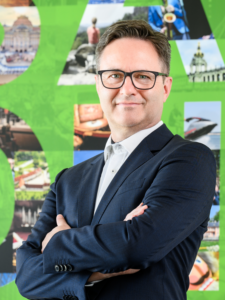
For the development of the cluster, Saxony Trade & Invest Corp. (WFS) and nukliD® complement each other’s work. nukliD® is familiar with the technical expertise, companies, and specific needs of the radiopharmaceutical community. Meanwhile, WFS contributes international networks, location marketing, expertise in business attraction as well as access to other regions. ‘Saxony brings together the entire radio- pharmaceutical value chain in one location – from isotope production to patient care. Our mission as WFS is to raise the international profile of this ecosystem and attract companies, investors, and skilled profession- als,’ explains Thomas Horn, CEO of WFS. In order to promote Saxony as a centre for radiopharmacy, WFS visits conferences and organises in- house events. On international events of the life sciences industry such as BIO Europe, the German Biotech Days or EANM, information mate- rials showcase Saxony as a comprehensive life sciences hub. In addition, WFS integrates radiopharmacy into its own established formats, such as project workshops and the annual Life Sciences Forum. This year, for the first time, the Radiopharmacy Forum Dresden will take place on 7 to 8 October as a new flagship event, which is organised by the Helmholtz Zentrum Dresden-Rossendorf, powered by nukliD®, and financially and conceptually supported by the WFS. The forum brings together stakeholders from industry, research, clinical practice, politics, and regulatory specialists. As part of the evening programme for targeting investors, a panel discussion will highlight Saxony’s specific advantages in nuclear medicine such an established value chain, clinical partners, and excellent logistics. At the same time, the city of Dresden will officially open the new Dresden-Rossendorf commercial sites as part of the forum, thus offering a concrete growth opportunity for companies interested in establishing a presence there. The Radiopharmacy Forum Dresden is intended to become a recurring event.
International networking
Previously, the ‘Hi-Tech meets Life Sciences Forum 2025’ in Dresden, which was organised by WFS and HZDR, was a catalyst for the collaboration with the Belgian consortium Rad4Med.be network, which promotes nuclear medicine applications and is managed by BioWin, the health cluster of the Wallonia region. Since then, nukliD® has established a close exchange with BioWin. The focus is currently on mutual invitations to panels and specialised events, the exchange of ideas on building high-performing ecosystems, and, looking ahead, the targeted networking of companies, research institutions, and clinical partners. ‘We not only want to learn from strong European healthcare regions, but also to combine complementary expertise in a way that leads to joint projects and greater European impact,’ explains Jungke. The nukliD® manager is convinced that clusters can serve as intermediaries between research, industry, clinical practice, politics, and funding: ‘In my view, the success of a cluster is not reflected by the numbers of business cards exchanged, but by concrete results, which means collaborations, common projects, an investment, or ultimately an innovation that reaches patients more quickly.’
The German pioneer cluster
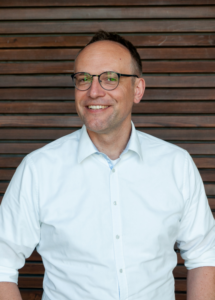
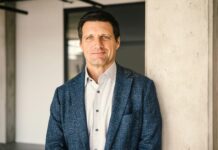
Compared to the radiopharmacy cluster in Dresden, the Medical Valley in Erlangen and Forchheim looks back on 20 years of development. ‘Starting as a local platform that brought people from the healthcare sector together, Medical Valley EMN has evolved into one of the most dynamic healthtech innovation ecosystems in Europe. We now cover the entire innovation chain, from research through clinical validation to the scaling up of start-ups,’ says Marco Wendel, Executive Board Director Medical Valley of the European Metropolitan Region of Nuremberg. Since 2010, Medical Valley EMN has been the leading-edge cluster in medical technology in Germany. This title was appointed in 2010 by former the Federal Ministry of Education and Research (BMBF), together with an award of EUR 40 million in funding for the region and a total of EUR 80 million in project volume. At present, Medical Valley is regionally active with around 500 companies, including start-ups, SMEs, and large companies, which are based in Northern Bavaria and can be categorised as medical device manufacturers, suppliers, start-ups, and early-stage companies as well as company consultants and regulatory experts. The Trust Medical Valley Platform serves as the foundation of the cluster with 265 paying members, 500 corporate partners, connected nationally and internationally with up to 800 organisations, and 17 employees in cluster management. The funding of the platform consists of membership fees and financial contributions from premium partners like the City of Erlangen, Siemens Healthineers, the Fraunhofer Institute, FAU, and Erlangen University Hospital. This amounts to an annual budget of EUR 2 million to support projects, events, and service contracts.
Emerging nuclear medicine in medical valley
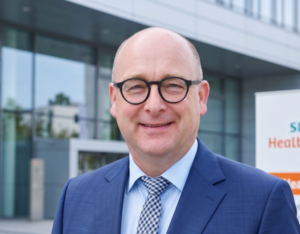
In the field of theranostics, Medical Valley consists of a diverse ecosystem of players: the Bavarian Cancer Research Center (BKFZ), which is headquartered in Erlangen, the Erlangen University Hospital, and the outstanding expertise in diagnostic imaging with Siemens Healthineers as a global leader in software, AI-powered imaging, and PET radiopharmaceuticals. ‘Digital imaging and theranostics are two areas in which international collaboration is crucial for driving both product sales and scientific cooperation. Through international cluster alliances, we aim to further increase the visibility of the companies and help them accelerate the process from concept to market-ready product,’ explains Wendel. Cap Digital Paris, EIT Health, Biocat/Spain and 28Digital are international examples for clus- ter and network cooperations. With its facilities and networking events, Medical Valley is a hub for start-ups and international companies alike. According to Juergen Simon, Head of Siemens Healthineers Technology Accelerator, the established contacts within the cluster have been paving the way to potential start-up partners in the medtech sector: ‘Specialists in nuclear medicine are still represented to a relatively limited extent on this platform. However, we see considerable potential for future development, particularly with regard to molecular imaging.’ For Siemens Healthineers, the upcoming EANM Congress in October, where the company sponsors a symposium featuring three speakers, is important event for identifying start-ups in the field of nuclear medicine as potential partners. LinaThera GmbH, which was founded in 2022, produces radionuclides for customers in the nuclear medicine sector. The start-up has collaborations with university hospitals as well as with the biotech company Nuclidium, which has copper-based therapies in clinical development. In addition to the office space at the Würzburg location, LinaThera’s three employees use Medical Valley’s Meeting Point in Forchheim to meet up with stakeholders. Moreover, Medical Valley helped LinaThera to find commercial space for a production site in the Forchheim district.
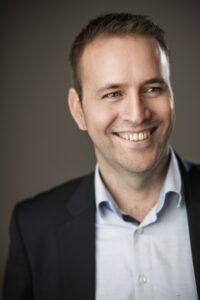
For Dr Christoph Thiel, founder and CEO LinaThera, the geographic location is the big point of the Medical Valley: ‘We need to locate our production facility near university hospitals that play a leading role in nuclear medicine – for example, to test the effec- tiveness of theranostics in collaboration with specialists on patients for whom other treatment options are no longer effective.’
The next step: Incubators for financing start-ups
One key challenge for start-ups is bringing innovation to scalability and commercialisation. According to Siemens Healthineers expert Simon, clusters like Medical Valley must develop over the next years into su- pra-regional incubators for start-ups to achieve more awareness among investors and potential corporate partners. According to Jungke, linking international clusters is the key milestone for development: ‘In Europe, we need to move away from isolated and strong islands of excellence toward interconnected radiopharmaceutical ecosystems.’ As for the entire international nuclear medicine sector, the EANM 2026 Congress in Vienna from 17 to 21 October will be the right platform for her to foster scientific exchange and promote collaboration.