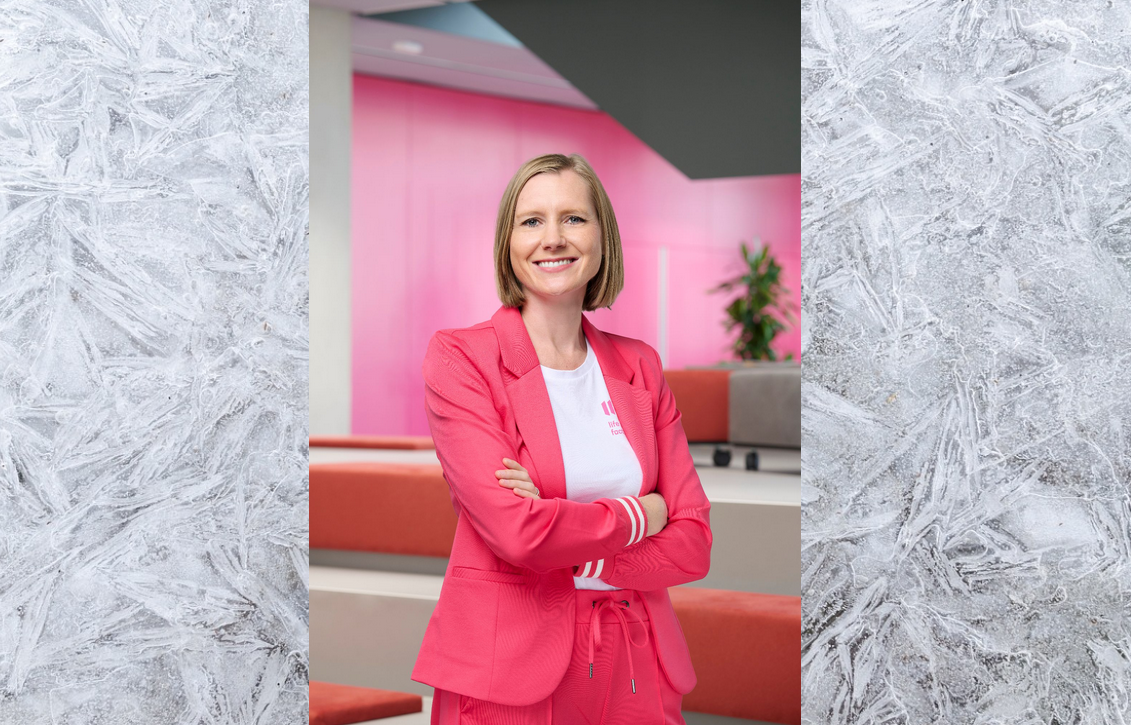
Bildnachweis: Life Science Factory, Pixabay, VC Magazin.
AI is transforming the life sciences from buzzword to backbone. From Göttingen
to Munich, start-ups use it to accelerate drug discovery, boost precision, and even
model human organs. As Life Science Factory’s Ellen Goel explains, AI is redefining how therapies are designed and delivered.
VC Magazin: What role does artificial intelligence currently play in Life Science Factory start-ups?
Goel: Artificial intelligence is becoming a key driver of innovation for life science start-ups. In our community in Göttingen and Munich, we see founders using it to accelerate drug discovery, improve imaging, and even extend into robotics. BrainQR, for example, applies generative AI to target previously ‘undruggable’ proteins in Alzheimer’s research. Deep Piction uses AI-powered imaging to make preclinical studies faster and more precise. AI is no longer peripheral – it is reshaping how therapies are discovered, developed, and brought closer to patients.
VC Magazin: Does AI already play a role in the early stages of life science start-ups, or is it more of an addon that comes later?
Goel: AI is foundational from the start. For decades, drug discovery was slowed by Eroom’s Law: rising costs, long timelines, and high failure rates. On average, bringing a drug to market still takes over ten years and USD 2 billion, with only 5% to 10% of candidates succeeding in trials. AI marks a turning point. Advances in models, compute, and data have enabled breakthroughs like AlphaFold, predicting protein structures in minutes. One of our accelerator alumni, Deep LS, shows how AI can design the right candidate upfront, saving years of work and hundreds of millions in cost. This is not incremental. If AI can lift trial success rates from 10% toward even 50%, the economics of drug discovery change entirely. For start-ups, AI is the engine driving innovation from the very beginning.
VC Magazin: How do you perceive investor interest? Is AI still a ‘hot topic,’ a ‘must-have,’ or already saturated?
Goel: Investor appetite remains strong. The focus has shifted from individual therapeutics to platform technologies such as AI-driven discovery engines or computational biology. Major funds and pharma are committing billions, showing that AI is no longer hype but infrastructure. What matters now is credibility: investors seek founders who combine strong biology with computational depth. Those teams are securing long-term venture backing.
VC Magazin: What challenges do investors face when assessing the innovative strength of AI solutions in life science start-ups?
Goel: Investors face three major challenges. First, data quality. Life science datasets are vast but inconsistent – some are excellent, others require heavy cleaning before they can be applied to AI models. This raises doubts as to whether insights are robust or overly dependent on narrow data. Second, clinical validation. Despite breakthroughs, large-scale success in drug development is still rare. Productivity gains are real, but investors question the ROI of AI-generated drugs as the cost and time reduction promised has not yet materialised at scale. And third, regulation. Drug development takes ten to twelve years, beyond a typical VC cycle. AI can shorten discovery, but clinical phases still take years. Encouragingly, new start-ups are using automation to speed up regulatory processes and reduce documentation times.
VC Magazin: Are there examples of innovative AI applications in start-ups that go beyond the usual use cases?
Goel: Absolutely. One striking example comes from the field of drug testing. The next wave is happening on socalled organoids – miniature organs such as hearts or livers grown from human cells in the lab. Traditionally, new drugs are tested in preclinical trials on mice, which only provide about 50% to 70% predictive accuracy for human responses. By contrast, organoid-based testing reaches around 90% accuracy because these models replicate human physiology far more closely. The start-up myotwin based in the Life Science Factory Göttingen is pioneering this approach. They created a ‘digital twin’ of the heart muscle and use AI to predict how a given drug will perform in human cardiac tissue. This can reduce costs, minimise risk, and speed up development.
VC Magazin: How can the use of AI transform decision-making processes in the life sciences?
Goel: AI enables scientists to move beyond narrow hypotheses. By scanning vast datasets,
it reveals hidden patterns and new biological insights. This accelerates discovery, improves trial design, and supports personalised treatments. Conditions once seen as untreatable may become addressable.
VC Magazin: How would you assess the openness and speed with which start-ups integrate AI into their development processes compared to corporates or big pharma?
Goel: Start-ups are faster and more agile, though scaling often requires pharma partnerships. Big Pharma is also advancing, but more cautiously due to regulation and size. Meanwhile, big tech like Google, Microsoft, AWS, or Nvidia bring massive resources that could disrupt traditional players. Hybrid models such as corporate-backed venture studios, and mechanisms like ‘golden tickets’ where pharma sponsors selected start-ups, connect agility with scale and drive adoption.
VC Magazin: What strategies exist to increase acceptance of AI applications – especially among patients or healthcare professionals?
Goel: Acceptance depends on solving real problems. If AI-driven therapies improve outcomes or reduce costs, patients and doctors embrace them. For professionals, usability is key – tools must fit smoothly into workflows. For patients, trust and transparency matter: they need assurance of testing, regulation, and safety. The strategy is clear: demonstrate benefit, integrate seamlessly, and communicate openly.
VC Magazin: How do you see the future development and potential of AI in the life sciences? Which other trends do you think will gain importance?
Goel: Two themes stand out: personalised treatment and ‘lights-out factories.’ Precision medicine, integrating genomic and clinical data, is becoming feasible as costs fall and computational power rises. AI can combine these datasets to create highly targeted therapies, and funding trends show strong investor confidence. At the same time, automated labs and digital infrastructures are evolving, where experiments are designed, executed, and analysed with minimal human intervention. This next generation of automation promises to accelerate discovery, cut costs, and enable experimentation on a scale that was unthinkable just a few years ago.
VC Magazin: Thank you very much!
About the interview partner:
Ellen Goel is Managing Director of the Life Science Factory. With a background in venture building and innovation management, she focuses on supporting founders in the life sciences with access to infrastructure, expertise, and networks.