
Bildnachweis: Ignite Medical, DxPx Advisors, FCF, DiaMonTech, Pixabay, VC Magazin.
German medtech and diagnostics start-ups face a number of challenges for raising seed and venture capital. Early networks with industry leaders and end customers are key for a successful promotion of the medical and commercial benefits of the developed products.
What the Berlin-based start-up DiaMonTech started with a refrigerator-sized device is now set to be launched in a handheld size. The innovative character of the blood glucose meter called D-Pocket is its non-invasive infrared technology. Diabetes patients can use it to measure their blood sugar levels without finger pricks or mini sensors implanted in the skin tissue. After a blinded clinical study delivered results at a similar level of precision to approved invasive patches with sensors, DiaMonTech now plans to submit an application for the approval of D-Pocket in Europe. Beyond that, an initial meeting with the FDA to discuss the next steps for an approval process for the US market took place in August. Co-founder and CEO Thorsten Lubinski clearly outlines the next milestones until 2027: ‘We want to finish D-Pocket, set up manufacturing facilities, get European approval and generate initial sales. Our long-term goal is to integrate the infrared sensor into smart watches or fitness bands.’ DiaMonTech pursues a threepronged sales strategy in Europe: selective contracts with statutory and private health insurances, online sales via the company’s website, and collaborations with distributors in the markets outside Europe. The price level is expected to be in line with that of the two best-selling glucose sensors for self-payers. With the recently completed financing round of EUR 12 million, the company is fully financed for the next two years. In total, DiaMonTech has raised EUR 37 million since its founding in 2015. Samsung Next, the global venture capital arm of the company, has been on board since the last financing round.
Financings are still a white spot…
With the latest steps, DiaMonTech is well on track to transform a new technology into a healthcare product. In doing so, the company has overcome a number of hurdles that start-ups in the diagnostics and medtech sector face when seeking early-stage financing, particularly in Germany. ‘Without any doubt, one of the problems is that there are only a few large venture capital companies in Europe that invest in the diagnostics and biotools segments,’ says Dr Mirko Stange, partner at DxPx Advisors. With DxPx Capital, the biochemist with a doctorate founded an investment vehicle funded by private money from industry executives which sets up seed financing for start-ups in the range of EUR 1 million to 3 million. Stange focuses on companies that are active in diagnostics, digital health, or as laboratory equipment suppliers. His strategic approach: ‘I see our task in getting startups and their founders on the right track right from their start.’ In addition to financing, the investors contribute business expertise and access to networks. ‘Such an ecosystem of door openers from the industry exists not only in the US, but also in Germany,’ says Stange. As for networking events, he has his own company, DxPx Conference.
… and network culture as well
With their questions about the business model and the strategic goals as well as their own feedback on the questions of the company founders, these networks contacts provide a wide range of expertise for the companies. ‘Establishing close networks with customers, users and doctors as early as possible is the key to successfully developing the business model,’ explains Stange, who worked as interim managing director of numerous medtech and diagnostics companies and points out one stark contrast to the business spirit of US start-ups: ‘In addition to lack of money, many diagnostics and medtech start-ups in Germany still lack the willingness to build up early contacts with industry players who can help them advance.’ For his own companies, Stange takes the feedback from industry veterans via scientific advisory boards. In addition, he conducts annual surveys with selected venture capital firms about the companies. According to him, two factors are key to successfully scaling up a technology transfer. On the one hand, start-ups have to clarify the issues of reimbursement for their products with insurers and health insurance companies at an early stage of product development. At the same time, management must demonstrate that it is addressing the right end markets. Stange cites lino Biotech as an example of the establishment and successful exit of a portfolio company. Founded in 2020 as a spin-off from ETH Zurich, the company has developed a label-free biosensor platform that can be used to directly image biomolecular interactions in living cells. In March 2023, lino Biotech was acquired by Miltenyi Biotec.
Transforming products in new start-ups
Isabel Antholz is taking the early financing process one step further with Ignite Medical, which was founded in May 2025 in Leipzig. Antholz, who is co-founder of the Business Angel Network Central Germany, aims to build up ‘company start-ups without founders.’ In other words, Ignite Medical facilitates the transfer of ideas that remain at universities and academic institutions to a spin-off company that is to be built up for the development of this product. All projects designed by Ignite are still undergoing due diligence. These include an AI-based decision-making system for patient-specific chemotherapy, speech recognition software for clinical staff treating patients, and a silicone product for wound healing. Ignite Medical puts together the right founding team as the starting point for all start-ups. The board members for the spin-offs are recruited through Ignite’s own networks and partners. Ignite will coach this founding team to draw up the business plan. Co-investors take over the financing at the time of creating the spin-off. Ignite draws on private investors such as family offices for this purpose as well as regional banks and investment companies who also support the initial financing. Business angel Antholz intends an exit ‘as soon as the companies have developed a marketable product.’ Medtech start-ups have no shortage of public funding. However, Antholz identifies the main problem at a different interface: ‘Public funds are far too rarely linked to private capital. Since access to private capital is difficult, the CEOs of start-ups are fully absorbed in their work for twelve months or more when raising funds for seed financing.’ In order to be successful, complementary scientific and business expertise is a must for the management teams.
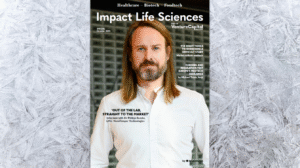
The formula for success
Medical and economic expertise are two sides of the same coin. This combination is becoming increasingly more important when it comes to presenting the equity story for larger financing rounds after seed financings. This challenge is even more evident in Europe with its lack of big venture capital companies that are willing to invest in medtech start-ups and developers of biotools. ‘Historically speaking, valuation multiples and exit potential are more attractive for drug developers after a successful proof of concept,’ says seed investor Stange. ‘On the other side, the company value of diagnostic and medtech companies will not automatically face a complete collapse if the most promising product flops. Instead, the technology platform can often still be used for other applications without having to start over from zero.’ Start-ups can only secure venture capital financing if they have clear strategic goals and an excellent management track record. ‘Investors beyond the seed phase, especially institutional venture capital funds, do not expect technology demonstrations in company pitches, but rather clearly recognisable characteristics for an investable business case,’ explains Mathias Klozenbücher, Head of Life Sciences at FCF Fox Corporate Finance. ‘The most important criteria for raising venture capital are clearly defined: a differentiated market position, robust market analyses, a sound IP strategy, a clear go-to-market strategy, multiple exit options, and, last but not least, a strong hunger for success on the part of the company founders.’ In terms of investment topics, Klozenbücher sees the greatest interest on the venture capital side in AI-supported diagnostics, systems for clinical data aggregation, and solutions for minimally invasive therapy.
Outlook
By showing these success factors in a consistent way, European medtech start-ups can also raise larger amounts of funding, as Ultromics from the UK recently did in July. A consortium of five international investors provides the equivalent of EUR 50 million in a series C financing round. Ultromics intends to use this funding to expand into the US and other key markets with its approved AI-based diagnostic procedure, which identifies coronary artery disease.