Bildnachweis: Life Science Factory, Avocet Bio, VC Magazin, Pixabay.
The Life Science Factory offers founders from research in Göttingen and Munich space as well as support in finding capital and expanding their network. Avocet Bio is one of the start-ups that benefit from what the Life Science Factory has to offer.
VC Magazin: How do you rate Germany as a life sciences location in an international comparison; why should startups set up in Germany and stay here?
Reimer: Germany may not match the US or Singapore in terms of funding amounts, especially private equity, and regulatory ease, but it offers significant advantages for life science start-ups. Technological development in the life sciences sector is robust, and the industry is highly relevant. Efforts are being made to better align public funding with the needs of start-ups, and private investors are increasingly recognizing the importance of the life sciences sector. Germany has a reliable regulatory system that ensures high standards. With a strong network of universities and research institutions, it offers access to a talented pool of professionals in the life sciences. Additionally, its rapidly growing ecosystem fosters collaboration within the start-up community.
Maamari: Germany holds up very well as a life sciences location on the international stage, offering a dynamic ecosystem for research, innovation, and commercialisation potential. With top-tier universities and research institutions, there is a huge pool of talented researchers and trained professionals capable of translating their innovation. In addition, Germany offers a robust public funding landscape, with programmes such as SPRIND, EXIST, Go-Bio, and various European funding initiatives that specifically support early-stage innovations and facilitate the transfer of technology from academic research to start-up ventures. Furthermore, Germany is home to numerous global leaders in the biotech and pharmaceutical industries, providing excellent opportunities for industrial partnerships and direct market access.
VC Magazin: What does the perfect location need for a life sciences start-up, what factors should be considered when choosing?
Zeisberg: A life sciences start-up needs access to expensive hightech equipment. If it had to purchase everything with its own funds, that would ruin a start-up before even getting started. Therefore, a location such as the Life Science Factory, where all necessary equipment is already available, is quite helpful, as it allows the start-up to focus on the important things, such as development of the product, right from the start. Additionally, flexibility is key for life sciences start-ups, as they need to scale operations quickly when required, but also can downsize just as easily. Having the possibility to add or reduce benches and desk space monthly is a great benefit. Finally, and at least equally importantly, there is a network of like-minded people: to share advice but sometimes also simply ups and downs.
Reimer: The ideal location for life sciences start-ups should integrate several key success factors: proximity to research institutions for access to knowledge and talent, availability of
funding as well as a network of investors, and adaptable lab infrastructure that meets start-up needs. Additionally, it should provide networking opportunities with like-minded founders mentors, and industry experts. Support structures, such as assistance with regulatory requirements and business topics, are also highly advantageous.
VC Magazin: With the Life Science Factory, you provide 90 places for start-ups in Göttingen and recently also established 50 in Munich. What do you offer the start-ups in your Factory?
Reimer: The Life Science Factory offers a unique combination of state-of-the-art facilities, including modern and flexible labs fully equipped with laboratory equipment and serviced by our team, all integrated into a comprehensive mentoring programme. Over the years, we have built a strong community of founders and developed programmes that addresses business-related questions and support start-ups in achieving investor readiness.
VC Magazin: Why did you choose the Life Science Factory, what is special about this location for you?
Maamari: Coming from the University Medical Center Göttingen (UMG), joining the Life Science Factory here in Göttingen was a natural next step for us. We were already connected to the community there, had relationships with people on site, and felt a strong sense of familiarity even before officially moving in. The environment at the Life Science Factory fosters collaboration, and being surrounded by like-minded innovators right in our hometown makes it the ideal place to grow our start-up. VC Magazin: Avocet Bio is working on an antiviral drug to combat respiratory RNA viruses in the future. The idea originated in the laboratory – how was the transfer to a company organised?
Zeisberg: The idea originated in our academic laboratory, which focuses on chronic heart and kidney disease. So, to develop an antiviral drug against respiratory RNA viruses, you
obviously need expertise outside our academic group. It also requires funding beyond what can be generated through academic grants alone. This prompted us to spin out, and we
found great support from the UMG in organising this transfer, including the possibility for me to act as CEO of the company in its start-up phase while retaining my professorship at the UMG. Important intellectual property was also transferred to the founders.
VC Magazin: The aim of Avocet Bio is to bring antiviral therapies into clinical application. What are the next steps in this matter?
Maamari: In response to the COVID-19 pandemic, we initiated the development of ‘AvoCoron’, a broad-spectrum antiviral product targeting SARS-CoV-2. With this effort, we successfully advanced our preclinical pipeline, achieving proof-of-concept in both in vitro and in vivo studies. Building on the expertise and results gained – particularly the successful and stable delivery of mRNA via nanoparticles to the respiratory tract through inhalation – we are now progressing our lead candidate, ‘Avo-Flu’, which targets the Influenza A virus family, toward a first-in-human trial. Our platform technology enables efficient knowledge transfer across respiratory indications, allowing us to accelerate the preclinical validation of ‘Avo-Flu’.
VC Magazin: What are your expectations for Germany’s life sciences location policy in the coming years – especially in light of Trump’s policy in the USA and the newly elected German government?
Zeisberg: This is a difficult question. Traditionally, the USA have been the country of life sciences start-ups, and Germany was lagging. During the past ten years, however, we’ve sensed an increasing entrepreneurial spirit in Germany, and both policy makers and academic institutions in Germany have realised that we need life sciences start-ups to help solve the problems of our time and to boost our economy. Thus, there is momentum for life sciences entrepreneurship in Germany, a new wave of emerging technologies, and a level of uncertainty for investments in the traditionally dominating US life sciences industry. If the new German government keeps the momentum going through further investments and through fostering an enabling environment, this could be a triple opportunity for entrepreneurship in all sciences.
VC Magazin: Thank you very much.
About the interview partners:
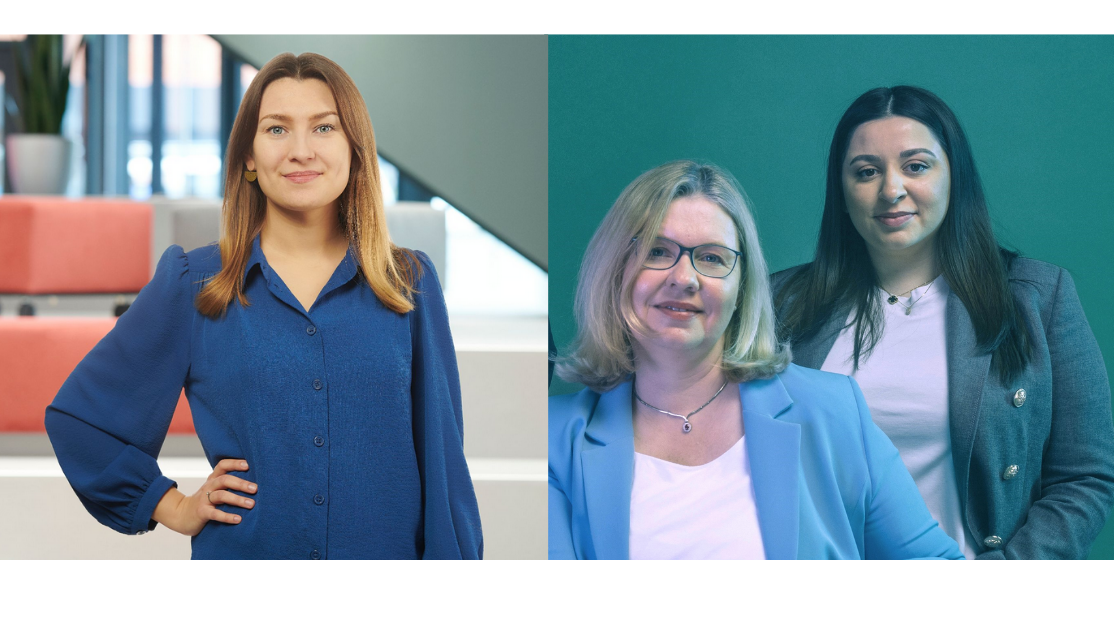
Irina Reimer, Venture Director at the Life Science Factory, leads her team in supporting and growing life sciences startups. With a background in Entrepreneurship and Health Economics, she offers strategic guidance to developing companies and manages accelerator programmes and the entrepreneurial support network at the Life Science Factory.
Prof. Dr Elisabeth Zeisberg and Dr Sabine Maamari lead Avocet Bio by combining scientific excellence with operational precision. Together, they are driving the development of a patented molecular scissors platform to combat current and future viral threats, with a focus on innovation, growth, and pandemic prevention.