Bildnachweis: Pexels, BIO Deutschland e. V., FGK Clinical Research, Delporte, Sofinnova, Forbion, Fundess, Daiichi Sankyo.
Germany’s life sciences sector boasts world class scientific excellence, industrial strength, and a robust start-up ecosystem. However, what is lacking more than ever is the capital needed to scale up, with the series B funding gap threatening to become a structural crisis. At the same time, there are signs that the situation can be turned around. Read on for some success stories and factors offering encouragement right now.
Bad news first: the funding gap between research laboratories and the global market has been widening in this country for some time, and it grew further last year. As revealed in the German Biotechnology Report 2026, published by EY in collaboration with BIO Deutschland, the situation regarding earlystage funding has deteriorated compared with the previous year. Notably, the volume of series B funding specific to biotech plummeted from EUR 169 million to a historic low of EUR 7 million. US biotech companies, by contrast, are able to raise funding rounds in the hundreds of millions at this stage of development. But there is good news as well: not only has the international funding environment brightened since then, but there are also mounting signs from Brussels and Berlin that more decisive action will be taken. For example, the European Biotech Act suggests that regulation should no longer be a cumber some bureaucratic obstacle, but rather accelerate success. The German Hightech Agenda has defined life sciences as one of its priority areas. Through the Startup and Scaleup Strategy, the German government has also acknowledged the series B and growth-phase funding gap as a critical challenge requiring targeted interventions in private and public venture capital mobilisation. The WIN Initiative (Growth through Innovation) aims to systematically encourage institutional investors to support German biotech SMEs for the first time. Last but not least, the foundations are in place. There is a broad consensus among stakeholders across the biotechnology ecosystem that Germany has the prerequisites to play a leading role in the field, including excellent research, strong industrial expertise.
Success stories show that it can be done
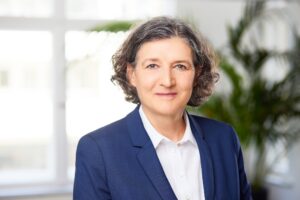
‘The change in political direction gives me cause for optimism. Important initiatives are also being launched in the area of growth financing. Of course, decisive and swift implementation is what matters most now. However, we are heading in the right direction, which will benefit our founders,’ says Dr Viola Bronsema, Managing Director of BIO Deutschland e.V. After a dip in recovery following the pandemic, she currently sees strong momentum for the sector at both the European and national levels. She also finds encouragement in the German ‘Biotech Hall of Fame’: ‘We have more biotechnology success stories than many people realise. BioSpring from Frankfurt, for example, is now a leader in the global nucleic acid market. Qiagen is a university spin-off that has grown into a global diagnostics giant.’ AiCuris and MorphoSys are also among them, although they have since been sold to foreign buyers. The same applies to Tubulis, which is based in Munich and was recently acquired by the US pharmaceutical group Gilead Sciences for USD 5 billion. ‘It is precisely from the Tubulis story that recommendations for Germany as a business location can be drawn,’ says Bronsema. ‘Sustainable value creation occurs when companies are successfully retained in the country. To achieve this, Europe must mobilise growth capital and create an integrated capital market. Meanwhile, there are also positive developments in the German biotech sector: pipelines are maturing, and the focus is increasingly shifting towards advanced clinical development.
The tide turns: Europe commits to Life Sciences Momentum
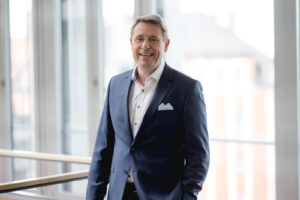
Martin Krauss is the Managing Director of FGK Clinical Research, a full-service contractresearch organisation (CRO) providing clinical development and consultancy services to the pharmaceutical, biotech, and medical device industries. ‘Every day, I witness the complex interplay between the various stakeholders responsible for bringing innovations to patients: research organisations, biotech firms, CROs, and clinical networks. Even beyond the biggest names, there is evidence that the entire process can be successful,’ he says. One such example is Rheacell, a Heidelberg-based company which, with the backing of a private investor, has established a complete value chain for cell therapies. In 2021, it received national authorisation to treat chronic venous ulcers. It is currently conducting global Phase III trials. Then there’s ITM Isotope Technologies Munich, which has been systematically building its radiopharmaceuticals business with in-house production since 2004, and is currently in the clinical development stage. And then there’s Formycon, which is also based in the Munich ecosystem and demonstrates that developing biosimilars in Germany is a viable approach. ‘I see the greatest progress in RNA technologies, precision medicine, and innovative therapeutic platforms, such as cell and gene therapies,’ highlights Krauss. He regards the European Biotech Act as long overdue, but not as an immediate breakthrough. ‘The crucial thing is the psychological impact that this complex reform package is already having today, long before the first tangible effects will be felt in 2027. For the first time, a draft in Brussels is not being torn to shreds, but is in fact being called for even more strongly in terms of its overall direction,’ he says. ‘Geopolitical shifts have created a new awareness: isolation is not an option, whereas making full use of Europe’s strengths certainly is. Europe is on the move.’
The international capital window has opened
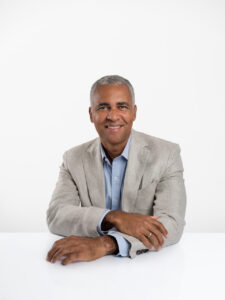
Karl Naegler, a partner at Sofinnova Partners, offers an investor’s perspective: ‘The German venture capital scene suffers from a structural misallocation of capital. Major funds are often foreign. One of the reasons is that the domestic LP base has so far invested too little in venture capital. The local ecosystem would benefit from German funds with international experience that can build companies on a global scale. The capital is there – it simply needs to be redirected. With its start-up and scale-up strategy, the German government is moving in the right direction.’ At the same time, the life sciences market is showing a clear upward trend. Global biotech indices are performing well, M&A volumes are heading for a record year, and even early-stage companies without clinical proof of product efficacy are achieving successful IPOs. ‘From a global perspective, the capital window is more open than it has been for years. This raises the question: does Germany have enough mature, investment-ready companies to benefit from this favourable situation?’ Naegler sees a fundamental shift here: ‘Strategic pipeline acquisitions have long been a cornerstone of pharmaceutical innovation, but demand has intensified recently. For instance, companies such as Novartis, Bayer, AbbVie and Eli Lilly are investing specifically in clinically validated precision oncology to offset the impact of expiring patents. This creates opportunities for German research. Those who can take excellent basic research all the way through to clinical validation will become an attractive takeover target: the Tubulis exit, one of the greatest early-stage successes ever, demonstrates the capabilities of German science and teams. For example, in the radiopharmaceutical sector, ITM and Nuclidium have shown how state-of-the-art university research can lead to the creation of companies that can compete internationally. These examples refute the notion that the endeavour is hopeless: the substance is there.’
Joining forces
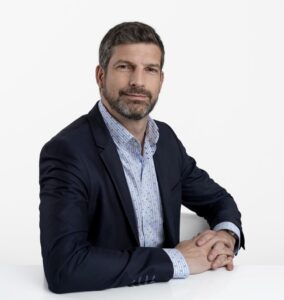
Earlier this year, Invest Europe launched the European Life Sciences Coalition (ELSC). This initiative has brought together leading European venture capital firms, research organisations, and industry stakeholders who collectively manage over EUR 26 billion in life sciences assets and support more than 1,500 companies. The coalition’s goal is to attract additional private and public investment to the sector and prevent young biotech companies from moving to the US in pursuit of growth and IPOs. ‘Firms are recognising that ecosystem-wide advocacy is as important as individual investment,’ explains Cédric Moreau, partner at Sofinnova Partners and chair of the ELSC Oversight Committee. ‘Europe’s greatest strength lies in the depth of its scientific expertise. What sets us apart, however, is our genuine collaborative culture across borders. A biotech company based in France can draw on manufacturing expertise in Germany, clinical networks in the UK, and capital from across the continent. This interconnectedness is a real advantage, and it is becoming more visible as the ecosystem matures.’ Over 200 signatories recently backed an open letter from the ELSC to leading EU politicians. ‘The response has been substantive. It is still early days, but the willingness of investors, research institutions, and industry to speak with one voice is a sign in itself that Europe is regaining some boldness,’ says Moreau. This approach differs from previous forms of advocacy. He adds: ‘We set out specific, actionable requests, such as mobilising institutional capital through a genuine Savings and Investment Union, establishing faster and simpler clinical trial pathways, and supporting a Biotech Act that meaningfully improves Europe’s competitiveness.’ The value lies in highlighting to decision-makers the practical experience of investors who have helped to build and finance successful European life sciences companies. ‘We want Europe to be seen as a place of opportunity, not limitation.
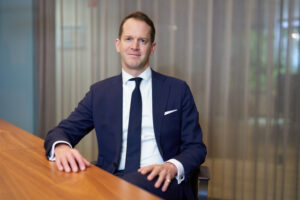
Therefore, we present examples that demonstrate what can be achieved,’ explains Marc van Voorst tot Voorst, Head of Public Affairs at Forbion, one of the 17 current members of the ELSC. ‘For instance, argenx originated from European scientific research and has grown into a globally recognised biotechnology company. As an early investor, Forbion witnessed firsthand how a combination of strong science, experienced entrepreneurs, and patient capital can build a company with a worldwide impact. The goal now is to make companies like argenx the norm rather than the exception.’ Moreau adds: ‘That level of detail is what turns dialogue into progress.’ Their message is encouraging: ‘Every generation of great European companies was built by founders who backed themselves before the conditions were perfect. The difference today? They now have a stronger ecosystem behind them, and it’s only getting stronger. Europe is ready to write its next success story, and we want to help write it.’
Funding opens up important opportunities
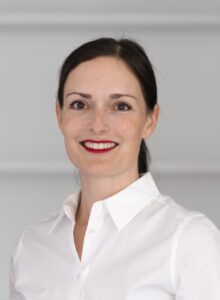
Alongside this, there is a frequently overlooked source of hope: Germany’s funding ecosystem. The myth persists that funding is complicated and only available to large companies. However, Dr Rosemarie Hermann, from funding consultancy Fundess, based in Munich and Frankfurt am Main, disagrees: ‘The research allowance is open to companies of all sizes, from start-ups to large corporations.’ In the life sciences sector, she finds that companies often view their development work as an integral part of their business. ‘In fact, these activities are eligible for funding, offering considerable financial potential,’ she says. One example is a packaging specialist for cytostatic drugs who received funding for their highly automated solutions. A generics manufacturer was also funded – not for a new active ingredient, but for its digital ADHD care concept. ‘Some people are surprised to realise what can be considered research in this context,’ says Hermann. She does not view funding as a stopgap measure, but rather as a strategic tool. ‘It helps to reduce technological risks, build new partnerships, and implement development projects that would be much more difficult to realise independently – all of which can mean the difference between failure and scaling up.’
Global company puts its faith in Germany
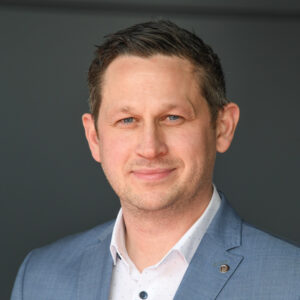
There has also been a significant development in the Hallertau region: the Japanese pharmaceutical group Daiichi Sankyo is investing EUR 1 billion there. Its Pfaffenhofen plant is set to become an innovation centre for new cancer therapies. Specifically, the complete technological value chain for antibody-drug conjugates is to be established, comprising the following steps: monoclonal antibody production, bioconjugation, sterile filling, lyophilisation, and analytical development. ‘Europe is often regarded primarily as a research hub. However, this perception overlooks the fact that we have excellent conditions here for translating complex innovations into reliable industrial-scale production,’ explains Matthias Kühn, Head of Europe Plant Management. ‘Close collaboration between development, production, quality assurance, regulatory authorities, and partner companies is essential. This presents a major opportunity: developing innovative therapies in Europe and scaling them up reliably for patients worldwide.’ At least 350 new jobs are set to be created at the site by 2030. ‘Regional value creation and sustainability are not mere location factors for us – they are essential prerequisites for long-term competitiveness and security of supply. Resilience emerges from the combination of strong regional structures and an efficient global network, forming a vital foundation for modern biopharmaceutical production in Europe,’ says Kühn. For Germany, this means far more than a plant upgrade: it is a model for developing and scaling innovative therapies here for patients worldwide.